



No Mad Men-style ad budgets here — despite the theme, Jesse Linklater is upfront that this session is about small, practical marketing moves for manufacturers with roughly 20-200 employees, not million-dollar campaigns. The premise: almost none of these companies have a full-time marketing person, and that’s fine — you don’t need one to make real progress. The session moves through the actual mechanics of a sales funnel (prospects → leads → quotes/opportunities → customers) and the handful of conversion rates worth tracking at each step, then into web metrics that matter (organic traffic, overall traffic, top 10 keywords) while explicitly telling people not to worry about deeper metrics like bounce rate unless they have serious time to act on them. The back half covers SEO fundamentals (manufacturing buyers are “hunter buyers” who dig past the first result, so landing in the top 3 is a real, achievable goal) and blogging as the most sustainable form of content — with concrete topic ideas, realistic time commitments, and word-count guidance. It closes with three specific homework items rather than a vague call to “do more marketing.” If your website’s blog section has sat empty since launch, or you’ve never actually calculated a lead-to-quote conversion rate, this is a good, unpretentious place to start.
What You’ll Learn In This Webinar
Chapter 1 — Marketing Resources in Manufacturing
Research into small and medium manufacturers found that almost none have even a single full-time marketing employee — fewer than 10% have someone spending half or more of their time on it, and less than 1% have two or more marketing people. Many have worked with agencies on their website or ongoing work, but this session focuses on what’s realistically doable in-house. The central question isn’t “do you need to do marketing” (probably not, strictly speaking) but “can marketing help” (almost certainly yes) — and it’s not as difficult as it might seem. A live poll shows most attendees rating themselves in the middle of the marketing-skill spectrum, with more than half above “rookie” level.
Chapter 2 — Search Engine Optimization Fundamentals
The “digital marketing ecosystem” includes your website, email, search engines, and social media — and it all starts with Google, which accounts for roughly 90% of search traffic. Since almost everything begins there, SEO sits at the center of the whole system, connecting your website’s own content (keywords, pages, blogs) with external channels like email marketing, paid search/social ads, and video — an interconnected mix where small, consistent improvements compound over time.
Chapter 3 — The Value of Marketing Measurement
Measuring what you’re doing turns marketing from guesswork into informed decision-making — without requiring a full-time analyst or a massive dashboard. Metrics split into two useful groups: your sales funnel (leads, quotes/opportunities, sales) and your web metrics (traffic). Jesse contrasts today’s much better (if still imperfect) trackability with the old “half my advertising works, I just don’t know which half” era before digital marketing existed.
Chapter 4 — Analyzing the Sales Funnel
The funnel is really more of a “strainer” — leaking a bit at every stage rather than cleanly converting everything poured into the top. The stages: prospects → leads → quotes/opportunities → customers, with past customers often recyclable into new quotes. Tracking and measuring each stage is what actually makes the funnel improvable.
Chapter 5 — Measuring Lead and Quote Conversion
Tracking leads (count, date, source — referral, partner, website, or a specific page) builds the foundation for continuous improvement. Once quotes/opportunities are tracked alongside leads, you get your first conversion rate (opportunities ÷ leads) — a useful signal of sales performance, marketing/branding health, and quoting quality, which Jesse notes can range from near 100% down to 40-60% depending on the business. Tracking sales on top of that yields two more conversion rates (opportunity-to-sale and lead-to-sale), giving a complete picture of the sales process.
“The more you know, the more you track, the more you measure, the more you can narrow that focus.” — Jesse Linklater
Chapter 6 — Essential Web and Traffic Metrics
Google Analytics is the standard free tool, but Jesse recommends ignoring deeper metrics like bounce rate, exit pages, or pages-per-session unless you have real time to act on them. Instead, focus on three things: organic traffic (a direct read on your SEO, distinct from people searching your company name directly), overall traffic (with organic as a percentage of it), and your top 10 ranking keywords — which can guide future SEO efforts, including targeting keywords where competitors currently outrank you.
Chapter 7 — Search Engine Optimization Strategies
On a typical search results page, ads sit at the top, but roughly 85% of clicks go to the first three organic results (about 60% to position one alone). Manufacturing buyers tend to be “hunter buyers” who dig deeper into results than typical consumers, which means landing in the top three — not necessarily position one — is a strong, realistic goal. SEO is genuinely difficult, but incremental in-house progress is possible using resources like “SEO for Dummies,” SEMrush, or Moz, or by hiring a local agency (meaningful value is achievable even at modest budgets, like $5,000-$10,000). The core philosophy: write for human readers first, and optimize for search engines second.
Chapter 8 — Content Creation and Blogging Tactics
Blogging is framed as the most sustainable form of content, since a website’s static pages have a limited number of keywords they can target, while every new blog post is a fresh SEO opportunity. Google favors blogs for their freshness and natural keyword richness (something homepages and product pages often lack). Topic ideas: following one job from start to finish through the shop, customer profiles, year-end industry reviews, trade-show diaries, and staff interviews. Writing doesn’t need to be polished — just genuine and consistent. Practical guidance: even one blog post per quarter is real progress, each taking roughly 1-4 hours to write (agencies typically charge $0.30-$1 per word), with a useful minimum length around 500-700 words (Google prefers closer to 1,200; around 200 words barely registers). Photos and video help engagement, and the SEO steps for each post (metadata, tagging, etc.) take only about 5-10 minutes once familiar.
Chapter 9 — Practical Marketing Takeaways
Three closing action items: (1) get a free trial of a keyword tool like SEMrush, Moz, or Ahrefs (or use Google Analytics) to see where your current keywords rank against competitors as a starting roadmap; (2) pick three blog topics, commit to a realistic publishing schedule, and actually publish them — noting that many company websites already have blogging capability sitting dormant and unused; (3) advance just one step further than your current level of funnel measurement — add lead tracking if you’re not doing it yet, start calculating conversion rates if you have the raw counts, and review metrics monthly or quarterly rather than daily.
Chapter 10 — Deep Dive Sales Metrics
In live Q&A: why does Google favor blogs? Three reasons — increased time-on-site, natural keyword richness (unlike often keyword-thin homepages or product pages), and content freshness (Google’s 2015 promise to de-emphasize freshness was reversed, and recency signals matter more than ever, which is why some marketers periodically refresh older posts). On verifying whether an outside SEO vendor did good work: get a professional SEO audit, ideally from a local, referral-based provider, which will clearly flag both strengths and gaps — self-service tools like SEMrush or Moz can also perform a basic audit for those comfortable enough to interpret it.
Chapter 11 — Lead Source and Opportunity Gaps
Deeper Q&A on sales metrics: beyond basic conversion rates, rep-by-rep comparisons reveal a “batting order” of performance and can surface which reps convert best with which customer types or lead sources. Jesse shares a real internal Genius example: a lead-to-opportunity gap traced not to a salesperson’s skill but to an overrepresented, lower-quality web lead source in their mix — a fix that saved significant time and money without costing any customers. On benchmarking new metrics: track for roughly one to two years to build real confidence in what “normal” looks like for your business, then use that baseline to flag over- or under-performance and prioritize where to act first.
FAQ
Do small manufacturers really need a dedicated marketing person?
Not necessarily — research shows well under 10% of small and medium manufacturers have someone spending half or more of their time on marketing, and most of what’s covered in this webinar is doable without a full-time hire.
What web metrics actually matter if you don't have time for deep analytics?
Organic traffic, overall traffic (with organic as a share of it), and your top 10 ranking keywords — more detailed metrics like bounce rate usually aren’t worth the effort unless you have significant time to act on them.
Do manufacturers need to rank #1 on Google to get sales?
Not necessarily — manufacturing buyers tend to be “hunter buyers” who dig through more search results than typical consumers, so landing in the top 3 organic results is a strong, achievable goal.
How much content or blogging effort is actually worth it?
Even one blog post per quarter is meaningful progress — each post is a new SEO opportunity, typically takes 1-4 hours to write, and should run at least 500-700 words to register meaningfully with Google.
How can you tell if an outside SEO vendor did a good job?
Get a professional SEO audit, ideally from a local, referral-based provider, which will clearly surface both strengths and gaps. Self-service tools like SEMrush or Moz can also provide a basic audit.

Get your eBook Scared to implement a new ERP?
"*" indicates required fields
Explore related articles

How will Artificial Intelligence Impact ERP Software?
AI technology built directly into ERP systems can help automate routine processes or create better user experiences by learning and adapting to user's language, allowing systems to better understand and respond to users.

What’s New in the HubSpot–Genius ERP Integration
See how our integration with HubSpot connects customer information, quotes and sales orders across both systems.
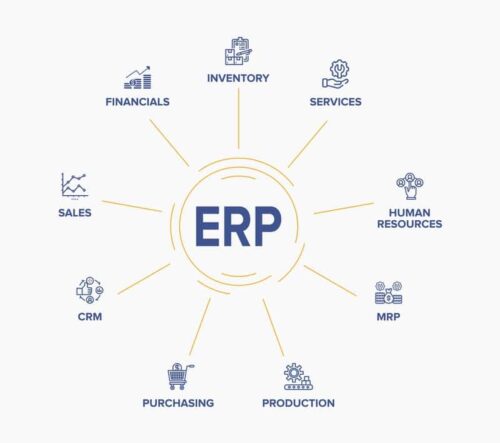
Back To Basics: What Is an ERP?
An ERP is business process management software that connects and integrates every aspect of a business — giving manufacturers visibility over their entire operation and allowing them to create better manufacturing processes, lower costs, and improve performance.

A manufacturing ERP that works as hard
as you do.
Give us a call to see how we’re different.
