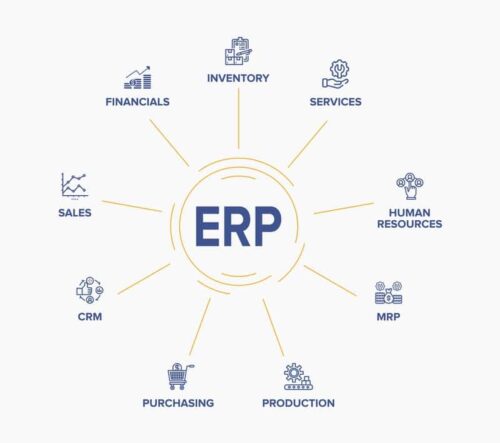
We look at how manufacturers can evaluate ERP vendors by business size and manufacturing type, why operational fit matters more than brand recognition, and what questions to ask before choosing a new ERP system.
Choosing an ERP system is one of the biggest decisions a manufacturer can make. The right system can improve visibility, reduce manual work, simplify scheduling, and help teams stay aligned from engineering through production and delivery. The wrong system can make everyday work harder, slow down teams, and create problems that are difficult to fix later.
Many manufacturers start their ERP search by looking at the largest or most recognizable vendors. That can make sense, but size and name recognition do not always mean the system is the best fit.
A name-brand ERP may look like the “safe” choice on paper, but that does not automatically mean the system is the right fit for your manufacturing environment. A system that works well for a large manufacturer making the same products at high volume may not work nearly as well for a growing custom fabrication shop managing engineering revisions, changing schedules, and project-based work. Even manufacturers of similar size can have completely different ERP requirements depending on how they operate.
Manufacturers should consider the size of their business, but also the type of manufacturing they do. Both play an important role in determining whether an ERP system will truly support the way their manufacturing business operates.
Why ERP Selection Often Goes Wrong
Many ERP evaluations start with good intentions. Leadership teams create requirements lists, compare feature sets, sit through demos, and narrow down vendors. But problems can start when manufacturers focus too heavily on broad functionality instead of operational fit.
A company may choose a well-known ERP platform because it appears powerful, scalable, or widely used. In theory, the system may seem like a safe long-term investment. But once implementation begins, the manufacturer starts discovering gaps between the software and the realities of day-to-day operations.
In many cases, the ERP itself is not necessarily “bad.” The issue is that the software was designed around a different type of manufacturing environment. Engineering revisions may require too many manual steps. Scheduling tools may not reflect how production actually works on the shop floor. CAD and ERP systems may remain disconnected. Teams may end up relying on spreadsheets and workarounds to bridge the gaps.
A custom engineer-to-order manufacturer with 120 employees may have far more complex ERP requirements than a repetitive manufacturer with 500 employees. Looking only at headcount does not tell the full story. That is why manufacturers need to look beyond company size and evaluate how well the ERP supports the way they build, schedule, and manage work.
Why Manufacturers Deserve an ERP Built for Manufacturing
Evaluating ERP Vendors by Business Size
Business size can still matter when selecting an ERP. Smaller manufacturers typically have different priorities than larger organizations, especially when it comes to implementation resources, process complexity, and internal staffing.
But size alone should never drive the decision.
The goal is not simply to choose software built for businesses of a certain scale. The goal is to find a system that fits the way the company actually operates.
What Smaller Manufacturers Should Prioritize (1–100 Employees)
Smaller manufacturers are often trying to solve visibility and process problems, and need a better way to manage the day-to-day operations of their business.
These companies are starting to move beyond spreadsheets, disconnected systems, or accounting software that was never designed to support manufacturing operations properly, and are looking for a system that makes day-to-day work easier.
For smaller manufacturers, the most important ERP selection criteria often include ease of use, implementation time, affordability, visibility across departments, and the ability to reduce manual data entry. Inventory and production coordination are also important, especially when teams are trying to keep jobs moving without relying on manual updates or workarounds.
Because many smaller manufacturers also do not have large IT teams or dedicated ERP administrators, implementation support matters.
During the selection process, manufacturers should ask questions like:
- How long does implementation typically take?
- How much internal staffing is required?
- How difficult is the system to maintain?
- Can the ERP scale as the business grows?
- Does the system reduce manual work or add more administrative overhead?
The best ERP for a smaller manufacturer is one that gives the business more visibility and control without overwhelming the team.
What Growing Mid-Size Manufacturers Should Evaluate Carefully (100–500 Employees)
As manufacturers grow, ERP selection becomes less about basic process improvement and more about how well the system can support real manufacturing operations.
At this stage, there are usually more jobs to manage, more inventory to track, tighter scheduling demands, and more engineering changes to coordinate. Disconnected systems and manual workflows become harder to manage, and generic ERP systems can start to show their limits.
Mid-size manufacturers need engineering, production, purchasing, inventory, scheduling, and finance to stay connected. When information gets stuck between departments or systems, small inefficiencies can quickly turn into bigger operational problems.
That is why manufacturing-specific functionality becomes more important at this stage. A generic ERP may technically support manufacturing workflows, but manufacturers need to look closely at how well those workflows actually work in practice. For example:
- How are engineering revisions handled?
- Can CAD data connect directly to ERP?
- How flexible is production scheduling?
- Can the system support custom jobs efficiently?
- How visible are job costs throughout production?
- How much customization is required?
These questions are especially important for manufacturers dealing with custom production, engineer-to-order workflows, mixed-mode manufacturing, changing production priorities, or long lead-time projects.
Vendor experience also matters. Mid-size manufacturers should evaluate whether the ERP provider truly understands manufacturing operations, or whether they primarily support generalized business environments. Questions worth asking include:
- What types of manufacturers does the vendor typically support?
- Does the implementation team understand manufacturing operations?
- How experienced are they with businesses of similar complexity?
- How much manufacturing functionality is native versus added through third-party tools?
At the mid-size level, manufacturers often need more than software alone. They need a vendor that understands how manufacturing businesses actually operate. If core workflows require extensive customization or manual workarounds, the ERP may become difficult to maintain as the business continues to grow.

What Enterprise Manufacturers Need to Consider (500+ Employees)
Large enterprise manufacturers often face different operational requirements altogether. Multi-site operations, global reporting structures, governance requirements, and standardized processes can all influence ERP selection.
For many large manufacturers, large enterprise ERP platforms may absolutely make sense. At the same time, these manufacturers should still evaluate complexity carefully. Larger ERP systems can introduce longer implementation timelines, expensive customization projects, more difficult user adoption, and increased administrative overhead.
This does not mean enterprise ERP systems are inherently wrong. But manufacturers should avoid assuming that “bigger” automatically means “better.” A system should match the operational realities of the business, not simply its employee count. Even enterprise manufacturers should evaluate how well the software supports real production workflows, user adoption, and day-to-day operational efficiency.
Evaluating ERP Vendors by Manufacturing Type
While business size matters, manufacturing type often has an even greater impact on ERP fit.
MTS vs ATO vs MTO vs CTO vs ETO: What’s the Difference?
Two manufacturers with similar revenue and employee counts may require completely different ERP capabilities depending on how they operate. That is why manufacturers should evaluate ERP vendors based on their actual production environment rather than relying only on company size or broad software comparisons.
ERP Evaluation Priorities for Engineer-to-Order (ETO) and Custom Manufacturers
ETO and custom manufacturers often manage highly variable production environments with frequent engineering involvement, custom BOMs, changing customer requirements, and project-based workflows.
Choosing an ETO ERP: What Custom Manufacturers Should Look For
For these manufacturers, ERP fit depends heavily on how well the system connects engineering, purchasing, production, inventory, and project management. If information has to be manually recreated or transferred between systems, delays and errors can build quickly.
Important areas to evaluate include:
- CAD-to-BOM integration
- engineering revision management
- custom quoting workflows
- project visibility
- flexible production scheduling
- job costing visibility
- long lead-time project management
During the ERP selection proccess, ETO and custom manufacturers should ask:
- How are engineering changes managed?
- Can CAD data flow directly into ERP?
- How are custom BOMs created and updated?
- How visible are project costs throughout production?
- How flexible is the scheduling system?
- Can the ERP support long lead-time projects?
For example, if engineering teams still need to manually recreate BOMs inside the ERP after designing parts in CAD software, that creates additional labor, delays, and opportunities for error.
For ETO manufacturers, ERP systems that tightly connect engineering and production workflows often provide far more value than generic ERP systems requiring extensive customization.
ERP Evaluation Priorities for Make-to-Order and Mixed-Mode Manufacturers
Manufacturers operating in make-to-order or mixed-mode environments often face constant balancing challenges. Production schedules shift regularly. Inventory levels fluctuate. Customer priorities change. Purchasing and production teams need accurate, real-time information to keep jobs moving efficiently.
In these environments, manufacturers should evaluate how well the ERP supports operational flexibility. Important evaluation areas include:
- inventory visibility
- scheduling adaptability
- purchasing coordination
- real-time production visibility
- production planning tools
Manufacturers should also look closely at how easily production schedules can be adjusted when priorities shift.
In many real-world manufacturing environments, schedules change constantly. ERP systems should help manufacturers respond to those changes, not create additional administrative bottlenecks.
ERP Evaluation Priorities for Repetitive and High-Volume Manufacturers
Manufacturers operating highly repetitive production environments often prioritize standardization, efficiency, throughput, and process consistency.
These businesses may place greater importance on:
- production planning
- inventory optimization
- procurement coordination
- standardized workflows
- reporting consistency
- operational scalability
These types of manufacturers should evaluate how well the ERP supports process control and operational efficiency across large production volumes. At the same time, they should still pay close attention to usability. If the system is hard for production teams to use, it can slow people down no matter how many features it has.
ERP Evaluation Priorities for Highly Regulated Manufacturers
Manufacturers operating in regulated industries often require stronger process controls and documentation management.
Manufacturers in aerospace, defense, and similar industries should carefully evaluate how ERP systems manage documentation and process visibility. Depending on the industry, priorities may include:
- traceability
- revision control
- documentation management
- audit readiness
- quality tracking
- controlled processes
Highly-regulated manufacturers should avoid assuming that every large ERP automatically provides a better fit for regulated operations. In many cases, operational usability still matters just as much as compliance-related functionality.
If the system becomes too difficult to use, manufacturers may end up relying on manual workarounds outside the ERP, which can create visibility and process issues of their own.
How ERPs Drive Success for Every Type of Manufacturer
Questions Manufacturers Should Ask ERP Vendors
ERP demos often focus heavily on polished feature presentations. But manufacturers should go deeper during evaluations. The goal is not simply to confirm that a feature exists. The goal is to understand how the ERP supports real manufacturing workflows.
Some practical questions manufacturers should ask include:
- What types of manufacturers do you typically work with?
- How much customization is usually required?
- How are engineering revisions handled?
- What does implementation typically look like?
- How long does implementation usually take?
- How does scheduling work in real production environments?
- How are shop floor updates captured?
- What integrations are commonly used?
- How are BOM changes managed?
- What level of support is provided after go-live?
- How does the ERP handle custom jobs or project-based manufacturing?
Manufacturers should also ask vendors to demonstrate workflows that reflect their actual production environment, not just generic software capabilities.
For example, an ETO manufacturer should ask to see how the ERP handles engineering revisions, CAD-to-BOM workflows, scheduling changes, project tracking, and purchasing coordination for custom jobs.
Those conversations often reveal much more than a high-level feature list.
Prioritize Fit Over Brand Recognition
Manufacturers do not usually struggle with ERP projects because the software lacked enough features. More often, problems begin because the system never truly matched the way the business operated.
The best ERP is not automatically the largest, most expensive, or most recognizable platform on the market. For manufacturers, the best ERP is usually the one that aligns most closely with production workflows, engineering processes, operational complexity, and long-term business goals.
That is why ERP selection processes should go beyond feature comparisons and vendor reputation. Manufacturers need to evaluate how well the software fits their production environment, how much customization is required, and whether the vendor truly understands manufacturing operations.
A good ERP can improve visibility, coordination, and efficiency across the business. A poorly matched ERP can leave teams relying on workarounds, fighting the system, and struggling to get the information they need.
When manufacturers prioritize operational fit over brand recognition, they are far more likely to choose a system that supports the way they actually work.
—-
ERP fit matters. That’s why Genius ERP is built for manufacturers, not adapted for them.
From engineering and quoting to scheduling, production, inventory, and delivery, Genius ERP helps manufacturers connect the work that keeps their business moving.
Get your eBook Scared to implement a new ERP?
"*" indicates required fields