You’ll learn what an ERP system is, how it supports manufacturing operations and the signs that your business may have outgrown spreadsheets and manual processes. We’ll also look at the benefits ERP software can provide, why it can have an even greater impact on small teams, how to choose the right manufacturing ERP system and what to consider when evaluating ERP pricing and budgeting.
Many small manufacturers start out managing their operations with a combination of spreadsheets, accounting software, paper documents and the knowledge stored in employees’ heads.
At first, this approach works. A small team can communicate informally, track jobs manually and find information when they need it.
But as the business grows, so does the complexity. More customers, more orders, more inventory and more employees create challenges that manual processes struggle to handle. Information becomes harder to find, reporting takes longer, and simple tasks require more effort than they should.
This is often the point when manufacturers begin looking at ERP software.
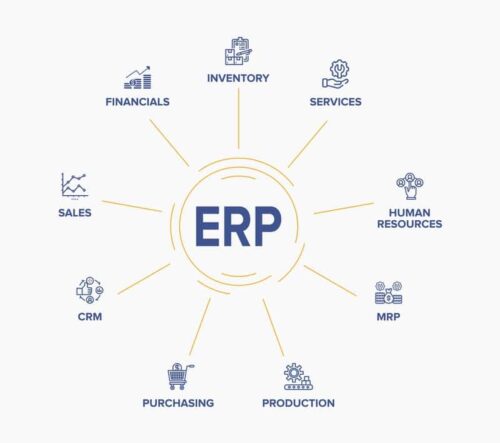
An Enterprise Resource Planning (ERP) system brings together information from across the business into a single system. Instead of managing quoting, purchasing, inventory, production, accounting and customer information separately, ERP software connects these processes and provides a shared source of information for the entire organization.
For growing manufacturers, ERP is not simply a technology investment. It is often the foundation that allows the business to operate more efficiently, improve visibility and continue growing without adding unnecessary administrative work.
What Is an ERP System?
ERP stands for Enterprise Resource Planning. It is software designed to manage and connect the core processes of a business.
For manufacturers, this typically includes:
- Sales and quoting
- Engineering and product data
- Purchasing
- Inventory management
- Production planning and scheduling
- Job costing
- Accounting and financial management
- Customer relationship management
Rather than storing information in multiple systems, an ERP system maintains a central database that everyone works from.
When a customer places an order, that information can automatically flow to purchasing, production, inventory and accounting. Teams no longer need to manually enter the same information multiple times or search through different systems to find answers.
The result is greater accuracy, improved communication and better visibility across the business.
Loos Machine & Automation
Signs Your Small Manufacturing Business Has Outgrown Spreadsheets
Many manufacturers do not decide they need an ERP system overnight. The need develops gradually as the business grows and processes become more difficult to manage.
If any of the following situations sound familiar, it may be time to consider ERP software.
Information Is Stored in Too Many Places
Customer information is stored in one system. Inventory is tracked in spreadsheets. Production schedules are maintained on whiteboards. Financial information lives in accounting software.
When information is spread across multiple systems, employees spend significant time searching for answers instead of doing productive work. Different departments may also be working with different versions of the same information, creating confusion and costly mistakes.
Employees Are Entering the Same Data Multiple Times
Manual data entry is one of the most common signs that a business has outgrown its current processes.
A customer order may be entered into a spreadsheet, copied into accounting software, emailed to production and manually shared with purchasing. Every time information is re-entered, the risk of errors increases.
As order volume grows, duplicate data entry becomes increasingly difficult to manage.
Reporting Takes Too Long
Many manufacturers struggle to answer what should be simple questions:
- Which jobs are profitable?
- What inventory is available?
- Which orders are behind schedule?
- What products generate the highest margins?
If employees spend hours gathering information before they can analyze it, reporting has become a bottleneck.
ERP systems automatically collect information from across the business, making it easier to access reports and performance metrics when they are needed.
Visibility Is Limited
As businesses grow, it becomes more difficult to understand what is happening across operations.
Without access to real-time information, managers often rely on phone calls, emails, spreadsheets or informal updates to track progress. This makes it harder to identify problems early and respond effectively.
An ERP system provides a clearer picture of inventory levels, job status, production schedules, purchasing requirements and financial performance.
Why Small Manufacturers Need an ERP System
The benefits of ERP software extend far beyond replacing spreadsheets. A properly implemented ERP system can improve efficiency throughout the organization.
How to Know Your Business Is Ready for an ERP
Improve Productivity
Many daily activities within a manufacturing business involve repetitive administrative work.
Employees spend time searching for information, updating spreadsheets, creating reports, transferring data between systems and responding to requests from other departments.
While each task may seem small, the cumulative impact can be significant.
ERP software automates many of these processes by connecting information across the organization. Data entered once can be used throughout the system, reducing manual effort and eliminating duplicate work.
This allows employees to spend less time managing information and more time focusing on activities that contribute directly to customer satisfaction, production performance and business growth.
Connect Information Across Departments
One of the biggest challenges facing growing manufacturers is ensuring that departments are working from the same information.
Sales, engineering, purchasing, production and accounting often depend on one another, but when each department uses separate systems, communication gaps can occur.
For example, purchasing may not be aware of a schedule change. Production may be working from outdated information. Accounting may not have visibility into project costs until after work is completed.
An ERP system creates a single source of truth that keeps everyone aligned.
When information changes, updates are reflected across the system, helping departments work together more effectively and reducing the risk of costly errors.
Sales teams also benefit from access to current inventory, production and customer information, making it easier to provide accurate quotes and delivery commitments.
Make Genius YOUR System
Increase Visibility Across Operations
Manufacturing decisions are only as good as the information available to support them.
Without real-time visibility, managers often make decisions based on outdated reports or incomplete information.
ERP software provides access to operational data across the business, including:
- Inventory levels
- Material availability
- Production schedules
- Job progress
- Labour performance
- Purchasing activity
- Financial results
With better visibility, managers can identify issues earlier, respond more quickly and make more informed decisions. Greater visibility also helps manufacturers identify bottlenecks, optimize production schedules and make better use of available capacity.
Instead of reacting to problems after they occur, teams can take action before delays, shortages or cost overruns impact customers.
Make Better Business Decisions
As manufacturers grow, decision-making becomes increasingly complex.
Questions about staffing, inventory purchases, production priorities and capital investments all depend on having accurate information available.
An ERP system helps manufacturers move beyond assumptions and make decisions based on real business data. Managers can analyze trends, monitor key performance indicators, compare actual results against expectations and understand how different areas of the business are performing.
This information supports better planning and helps leaders allocate resources more effectively.
ERP software also provides greater visibility into financial performance, making it easier to monitor cash flow, track costs and make more informed purchasing and inventory decisions.
Reduce Costs
Many manufacturers initially focus on ERP’s operational benefits, but cost reduction is often one of the most significant long-term advantages.
ERP software can help reduce costs by:
- Eliminating duplicate work
- Reducing data entry errors
- Improving inventory control
- Minimizing material shortages
- Improving production efficiency
- Reducing expedited purchases
- Identifying unprofitable jobs
Improved visibility also allows manufacturers to identify inefficiencies that may have gone unnoticed for years.
While ERP software requires an investment, many businesses find that the resulting improvements in efficiency, productivity and decision-making help justify the cost over time.

Why ERP Matters Even More for Small Teams
One common misconception is that ERP systems are only necessary for large enterprises.
In reality, smaller manufacturers often have even more to gain from ERP software.
Large organizations may have dedicated employees responsible for purchasing, inventory management, scheduling, accounting and reporting. Smaller manufacturers rarely have that luxury. In many businesses, employees wear multiple hats.
The person responsible for purchasing may also manage inventory. The production manager may be handling scheduling, customer communication and resource planning. Owners often find themselves involved in nearly every aspect of the business.
When a small team relies on disconnected systems and manual processes, valuable time is spent tracking down information and managing administrative tasks.
An ERP system helps small teams accomplish more with the resources they already have. By centralizing information and automating routine processes, ERP software reduces administrative workload and allows employees to focus on higher-value activities.
As a result, manufacturers can often increase throughput without proportionally increasing headcount. With fewer information gaps, less manual work and better visibility into operations, businesses can process more orders, complete more jobs and support growth more efficiently.
Choosing the Right ERP for Your Business
Not all ERP systems deliver the same value. Choosing a solution designed for manufacturers is just as important as deciding to invest in ERP software in the first place.
Many general business ERP platforms provide accounting and financial management capabilities, but lack the manufacturing-specific functionality needed to support production operations.
When evaluating ERP software, manufacturers should look for solutions that support their specific requirements, including:
- Production planning and scheduling
- Inventory management
- Purchasing
- Job costing
- Engineering and BOM management
- Shop floor data collection
- Manufacturing reporting and analytics
The goal is not simply to replace spreadsheets. It is to implement a system that supports the way your business operates and provides the visibility needed to manage growth effectively.
Industry-specific ERP software can often deliver value faster because it is designed around manufacturing processes and terminology.
ERP Pricing: Finding the Right Fit for Your Business
Many small manufacturers assume ERP software is out of reach financially, but ERP pricing has evolved significantly over the years. Today, many ERP vendors offer flexible pricing models that make it easier for small and growing businesses to adopt the technology without making a large upfront investment.
ERP Pricing Calculator
Use our ERP pricing calculator to get a ballpark cost based on your company’s profile.
Rather than paying for a system built for a multinational manufacturer, small businesses can often choose a solution that aligns with their size, operational requirements and budget. Some ERP providers offer subscription-based pricing, while others allow manufacturers to start with a core set of features and add functionality as their needs evolve.
Many ERP systems are also modular, allowing businesses to invest in the capabilities they need today and expand over time. This approach helps manufacturers control costs while still gaining the benefits of improved visibility, streamlined processes and better decision-making.
The key is finding an ERP system that fits both your business and your budget. A manufacturing-focused ERP designed for small and mid-sized manufacturers can often deliver greater value than a larger, more complex system that includes functionality you may never use.
Final Thoughts
Many small manufacturers reach a point where spreadsheets, disconnected systems and manual processes can no longer support the needs of the business. Information becomes harder to manage, reporting takes longer and employees spend increasing amounts of time performing administrative tasks.
An ERP system helps bring these processes together by creating a single source of information for the entire organization. It improves productivity, increases visibility, supports better decision-making and helps manufacturers operate more efficiently as they grow.
The real question is not whether your business is large enough for an ERP system. It is whether your current processes can continue supporting the way your business operates today — and the way you want it to operate in the future.
Get your eBook Scared to implement a new ERP?
"*" indicates required fields