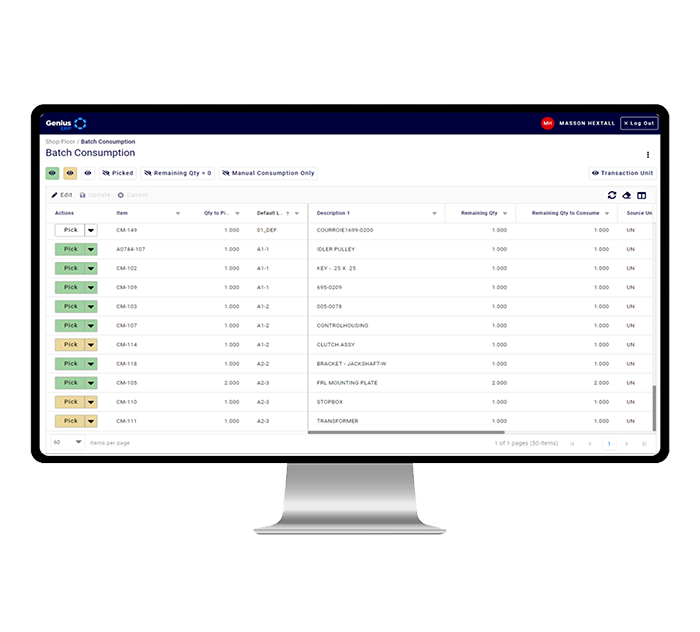
A Material Requirements Planning (MRP) solution is a business software designed to manage inventory effectively in relation to planning and scheduling processes, with the primary goal of improving productivity. Manufacturers utilize an MRP system to ensure timely delivery of jobs, maintain inventory levels at optimal levels, and inform their planning, scheduling, and purchasing decisions.
MRP systems play a critical role in streamlining production processes by analyzing demand, determining material requirements, and generating schedules for production activities. By integrating data from various departments and processes, an MRP solution enables manufacturers to optimize resource utilization, reduce lead times, minimize inventory holding costs, and enhance overall operational efficiency.
What is the difference between MRP and ERP?
The main difference between MRP (Material Requirements Planning) and ERP (Enterprise Resource Planning) lies in their scope and functionality within a business software system.
MRP, or Material Requirements Planning, focuses primarily on managing inventory and production processes in manufacturing. It helps manufacturers calculate material requirements, plan inventory levels, and optimize production schedules. Over time, MRPs evolved to include additional functionalities such as detailed capacity planning, scheduling, shop floor control, and performance analysis (known as MRP II). MRP II systems enable manufacturers to compare forecasts with actual data, analyze performance, and improve efficiency within the manufacturing domain.
On the other hand, ERP, or Enterprise Resource Planning, is a comprehensive business software system that goes beyond manufacturing processes. ERP solutions integrate and automate various aspects of an organization’s operations, including manufacturing, sales, quotes and estimates, customer relationship management (CRM), accounting, human resources, project management, and more. ERPs are designed to streamline and connect different departments and processes within a company into a single database. This integration allows for seamless communication, efficient task management, and the sharing of accurate information across the entire organization.
In short, while MRP focuses specifically on inventory management and manufacturing processes, ERP encompasses a broader range of functionalities to automate and optimize business processes across the entire enterprise, making it a more comprehensive and powerful solution for businesses.
Read more