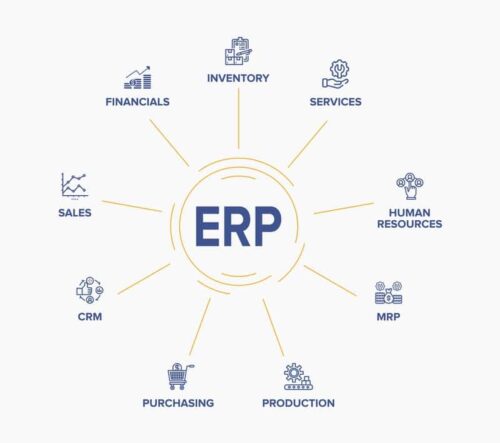
We explain how Genius ERP is approaching AI in a practical way, including why AI is harder in manufacturing than it looks, how we split the work between predictive intelligence and an ERP help agent, and what manufacturers can expect today and in the future.
In 2026, manufacturers don’t need more buzzwords or hype. They need tools that help them plan better, spot problems sooner, and make better decisions with the data they already have.
That’s what we set out to do when we started integrating artificial intelligence into Genius ERP. Not as a shiny new feature, but as a practical way to make the system more useful in day-to-day manufacturing work.
The point wasn’t to ‘add AI’ because it was trendy. It was to make our ERP smarter, more helpful, and more predictive, without making it more complicated.
The reality of AI in a manufacturing ERP
Manufacturing data is messy by nature.
Every Genius ERP customer runs their own environment, and every shop has different workflows, timelines, products, suppliers, and constraints. A custom transport manufacturer doesn’t operate anything like a job shop — and their data reflects that.
That complexity is exactly what makes AI in manufacturing ERP harder than it looks. A model trained on one manufacturer’s data won’t automatically work for another. And generic AI tools don’t understand real-world manufacturing constraints like production schedules, vendor lead times, or shop-floor dependencies.
So the challenge was straightforward, but not simple: How do you build AI for manufacturers that works across many environments — without flattening what makes each one different?
Two focused paths: Prediction and guidance
Early on, we split the AI work into two clear areas of focus.
The first was predictive intelligence — using ERP data to help manufacturers anticipate issues before they happen.
The second was guided assistance — giving users a built-in way to find answers, understand the system, and work more confidently inside their ERP.
Both solve real problems manufacturers deal with every day. And together, they form the foundation of how we’re approaching AI inside Genius ERP.
To develop this technology the right way, we partnered with Osedea, a software engineering firm with deep expertise in artificial intelligence and complex systems.
Osedea worked alongside our team to design the architecture, build the training pipelines, and help lay the foundation for AI that’s scalable, secure, and grounded in real manufacturing use cases. The result is technology that’s not just advanced, but also practical and maintainable over the long term.
Starting with real, high-impact use cases
Instead of trying to predict everything at once, we focused on a few areas where manufacturers consistently struggle — and where better insight can make an immediate, practical difference.
To start, we targeted three high-impact predictive use cases using the rich data already collected in Genius ERP.
1. Vendor lead times
Late suppliers don’t just delay one job. They create ripple effects across schedules, labor planning, and customer commitments.
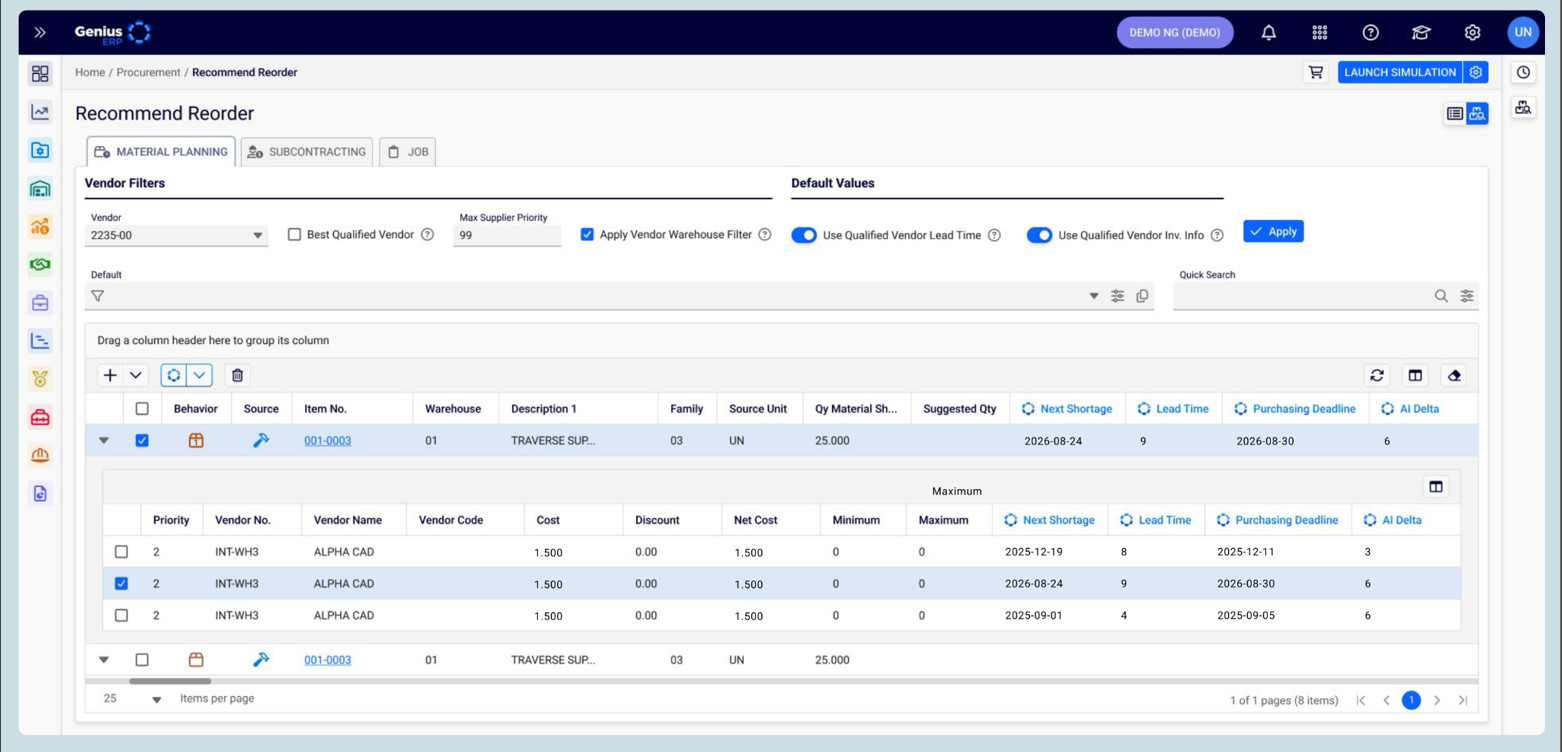
Using historical ERP data, we’re building models that can flag suppliers who are likely to miss delivery dates — early enough for teams to adjust schedules or source alternatives.
2. Job delays
Production delays rarely have a single cause. They’re often tied to material shortages, planning gaps, machine downtime, or labor constraints.
By analyzing past jobs, Genius ERP can surface early warning signs that a job is at risk, giving teams a chance to act before delays pile up.
3. Demand forecasting
Guessing future demand usually leads to one of two problems: stockouts or excess inventory.
By combining time-series forecasting with machine learning and statistical methods, Genius ERP can help manufacturers anticipate what’s coming and plan inventory with more confidence.
These aren’t abstract predictions. They’re practical signals manufacturers can use to stay ahead instead of reacting late.

From basic automation to predictive intelligence
Before this project, Genius ERP supported automation through tools like reorder reminders. Helpful — but oriented around responding, not anticipating. The goal of our AI project was to move beyond reminders and reports, bringing predictive intelligence directly into the workflow.
The predictive models are expected to go live in early 2026. From better planning to sharper inventory control, these features are designed to give manufacturers actionable insights based on their real-world data.
We’re also continuing to work with Osedea to develop validation tools that help manufacturers see the connection between data quality and prediction accuracy. Better, more consistent data leads to more reliable forecasts — and clearer signals teams can actually trust. Many Genius ERP users run complex workflows with layered jobs and dependencies. For them, predictive tools like lead time forecasting can reduce manual guesswork and improve delivery confidence.
Making AI scalable across manufacturers
Because each Genius ERP customer runs their own database, the AI must work securely and automatically — without requiring manual tuning for every environment.
The solution is a cloud-based training and deployment pipeline. Client data is used to train models in the cloud, and then these models are deployed back into each ERP environment, where they are kept up to date automatically.
The result:
- No shared customer data
- No one-size-fits-all models
- No extra work for customers
Just smarter ERP behavior over time.
Introducing Genius Cortex: An AI help agent that actually knows manufacturing
Predictive models are only part of the story.
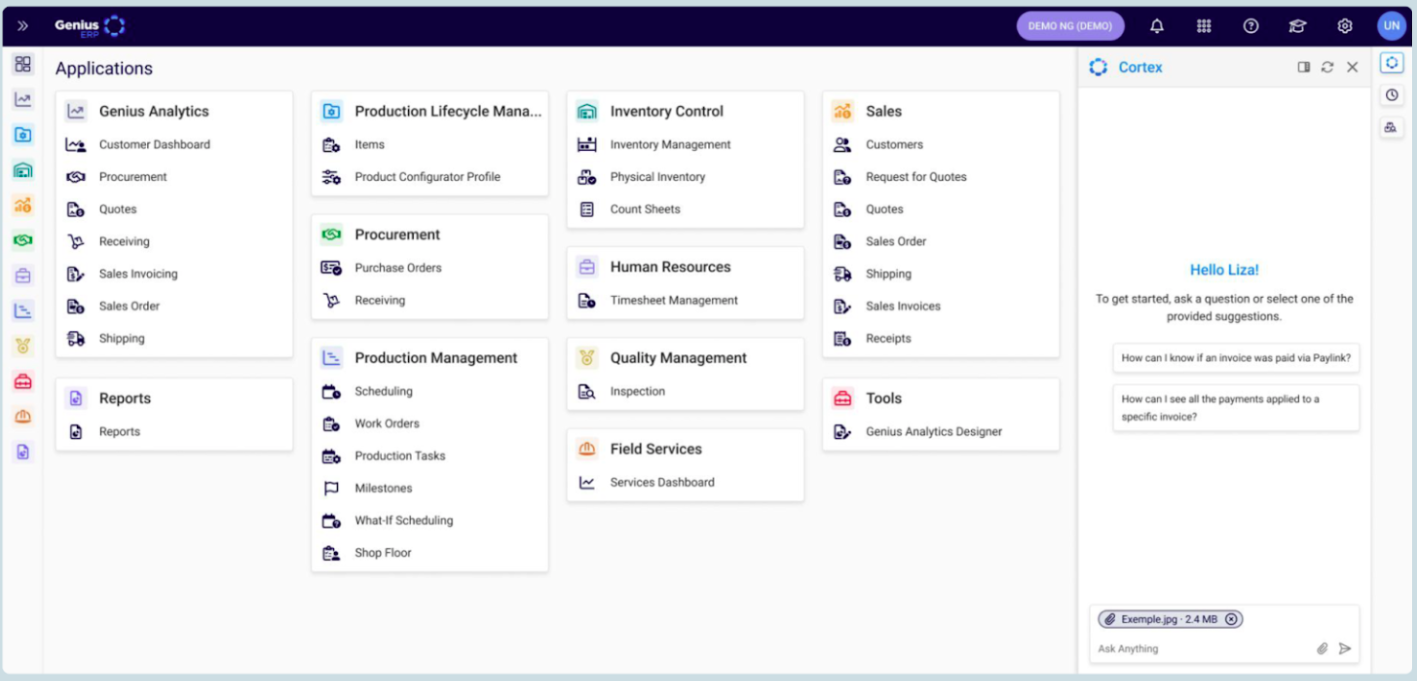
The second major initiative is Genius Cortex — an always-available AI assistant built directly into Genius ERP.
Cortex isn’t a generic chatbot. It’s trained on Genius-specific, manufacturing-specific knowledge, including:
- The Genius ERP Online Help Guide
- Genius Academy training content
- Product definitions, workflows, and terminology
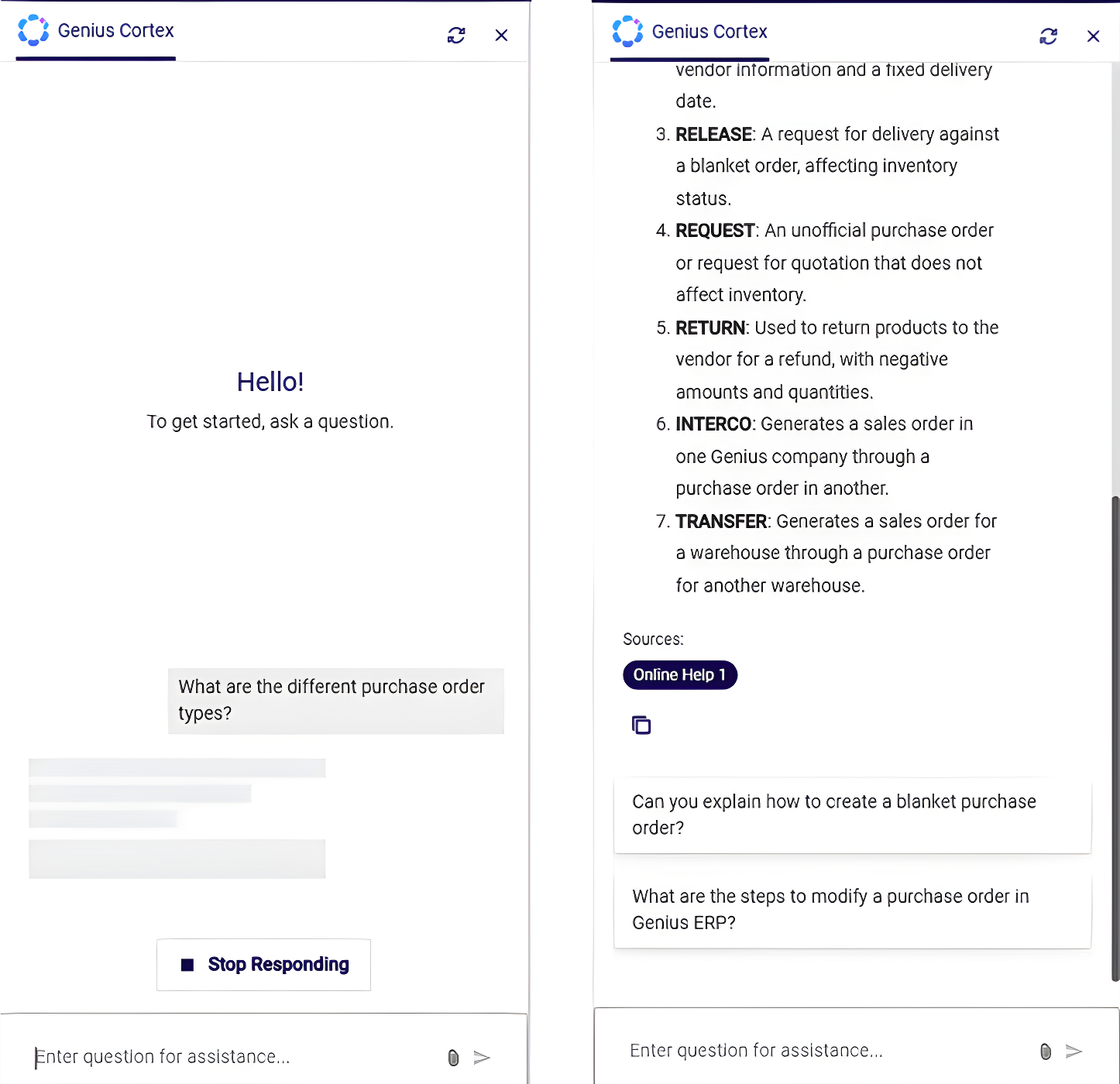
That means users can ask real questions in plain language — and get answers grounded in actual Genius ERP documentation.
Introducing Genius Cortex
Genius Cortex — the new AI-powered assistant built into Genius ERP
Built for accuracy, not guesswork
One of the biggest risks with AI assistants is hallucination — fast answers that sound confident but aren’t correct.
To avoid that, Cortex was designed with:
- Carefully curated knowledge sources
- Source-based responses
- Controlled context windows for accuracy and speed
Long training videos and documentation are broken down, transcribed, indexed, and kept up to date automatically as content changes. That keeps answers current without slowing the system down.
Each Genius ERP deployment has its own dedicated assistant, with access only to the tools and knowledge relevant to that environment.
What manufacturers get today — and what’s coming next
Genius Cortex went live inside Genius ERP in September 2025. In its first version, it’s already helping users:
- Find answers faster
- Navigate the system more confidently
- Reduce reliance on manuals and guesswork
Practical AI, built for the long term
This work isn’t about chasing trends. It’s about building AI that respects the complexity of manufacturing and fits naturally into day-to-day operations.
By combining predictive intelligence with a manufacturing-aware assistant, Genius ERP is laying the groundwork for ERP systems that don’t just record what happened — but help manufacturers decide what to do next.
The foundation is built. Now our focus is on continuing to refine and improve these tools in practical ways that help manufacturers plan better, work more confidently, and expand what’s possible.
handle.
Get your eBook Scared to implement a new ERP?
"*" indicates required fields