

In this article:
Learn where spreadsheets fall short and how an ERP connects inventory with purchasing, planning, and production to reduce manual work and improve visibility.


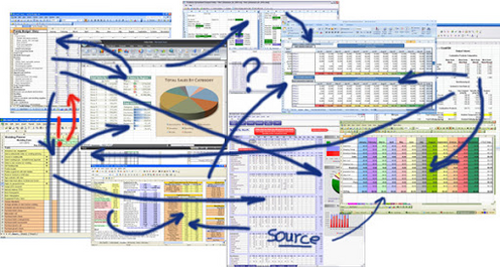
While you can certainly create inventory tracking spreadsheets in Excel, it is not the best option for inventory management — especially for complex manufacturers. Dedicated inventory management and control software, like that found in an ERP system, offers features that connect inventory with purchasing, planning, production, and accounting, making inventory tracking faster and more accurate.
Excel is familiar, flexible, and readily available. But as your inventory needs become more complex, keeping a spreadsheet accurate and making sure everyone has the information they need can become a job in itself.

Learn where spreadsheets fall short and how an ERP connects inventory with purchasing, planning, and production to reduce manual work and improve visibility.
Inventory management is the overseeing of all of your inventory and stock.
It includes controlling and overseeing inventory ordering, storage, and allocation, and ensuring you stock the right amount of inventory to minimize holding costs and associated waste.
If you don’t have a good inventory management system in place, you may face stock emergencies far too often, meaning you lack the raw materials to meet production demands. These shortages can cost you time and money, delay deliveries, and damage customer relationships.
Getting a handle on your inventory management will help you avoid such situations and keep your shop up and running smoothly.
Track inventory needs, control costs and replenish stock based on on-the-job demand with one simplified and fully integrated system.

Many manufacturers turn to Excel to manage their inventory as it is readily available, cost-effective, and easy to use.
For basic tracking, a spreadsheet can be useful. However, manufacturers, especially custom manufacturers, need more than a list of parts and quantities. They need to connect inventory information with the jobs, purchases, and production activities that affect it. Maintaining those connections through separate spreadsheets takes time and leaves room for mistakes.
Many manufacturers rely on a “magic spreadsheet”: a workbook that one person has created and adapted to manage the shop’s information.
The problem is that its creator may be the only person who fully understands how it works. Other employees might know where to enter a quantity but not how the formulas work or how changes affect other sheets.
If that person leaves the organization or takes time off, maintaining the workbook or correcting a problem can become difficult. Inventory management should be a process your team can follow consistently, rather than something that depends on one person’s spreadsheet knowledge.
Mistakes in your inventory counts aren’t just frustrating. They can throw off your planning and production.
Human error can creep into any system, but manually maintained spreadsheets create repeated opportunities for it. An incorrect quantity, a missed update, or an accidentally changed formula can leave your team working with inaccurate information.
Inventory management systems can reduce manual entry through tools such as barcode scanning. They don’t eliminate the need for accurate receiving, stock movements, and physical counts, but they can make it easier to record transactions consistently and reduce avoidable errors.
An inventory spreadsheet maintained manually in Excel does not provide a live view of your stock. If materials have been received or used but the sheet hasn’t been updated, the recorded quantity won’t reflect what is available.
Excel can connect to external data sources, but a standalone inventory workbook does not automatically know what is happening on your shop floor. Someone still needs to record those activities or maintain a connection that brings the information into the workbook.
With an ERP, inventory transactions can be recorded within the same system used for purchasing and production. This gives your team more current information for planning jobs, allocating materials, and managing purchases.
Keeping inventory accurate in Excel can require someone to update the workbook every time a part is received, moved, or used. When the same information is needed in other spreadsheets or systems, employees may have to enter it again.
That work takes time, and every additional entry creates another opportunity for a mistake. The more separate records you maintain, the more effort it takes to keep them consistent.
An ERP can reduce that duplication by connecting inventory transactions with related business processes. Instead of maintaining separate records for each department, your team can work from shared information.
Excel supports shared workbooks and simultaneous editing, but collaboration becomes harder when departments maintain separate files or circulate copies of the same spreadsheet.
Purchasing may be looking at one version while production uses another. Even if both files were accurate when they were created, later changes can leave the teams with different information about what is in stock or what needs to be ordered.
A centralized inventory system gives departments a common place to access and update inventory information. That makes it easier to coordinate purchasing and production without comparing separate spreadsheets to determine which one is current.
Good inventory management habits matter, whichever tools you use. But when keeping spreadsheets current takes too much time or inventory information is disconnected from the rest of your operation, a dedicated system can help.
For manufacturers, an ERP connects inventory management with planning, purchasing, production, and accounting.
You can manage these activities within one system, making it easier to see how material availability affects a job and how production activity affects stock levels. Your team spends less time piecing together information from separate files and more time using it to make decisions.
An ERP integrates your inventory management with the rest of your operation, making it easier to track inventory throughout your organization. Your staff can access a centralized inventory database that reflects recorded transactions.
This helps your team see what raw materials are on hand and what is available for upcoming work. Connecting inventory with production and accounting also makes it easier to maintain consistent operational and financial records.
Accurate inventory management can help increase a manufacturer’s overall efficiency. Employees can spend their time on other tasks instead of, for example, trying to locate one particular piece of stock.
With an ERP system, you can track the inventory used on each job, making production planning easier. Your team can see what raw materials are available and what still needs to be ordered to complete a job.
An ERP system keeps track of sales, purchasing, and logistics for you so that you can have the right inventory levels to match your business needs.
For custom manufacturers, this includes managing long-lead items. Identifying material requirements during the design phase can give purchasing more time to order those items before they are needed in production.
Visibility into stock levels and upcoming requirements also makes replenishment easier. Reorder recommendations or alerts can help purchasing identify what needs attention, reducing the risk of last-minute orders and expensive expedited freight.
And having insight into excess inventory helps your team decide what can be used on another job, returned where possible, or reviewed before more is ordered.
We break down what demand planning and ERP forecasting really mean in a manufacturing context, how they work together, and why they matter for running a more predictable planning environment.
Using an ERP for inventory management can reduce manual work and help your team make better purchasing and production decisions. Better-managed inventory supports getting jobs out the door on time and on budget.
Excel can remain useful for individual calculations and analysis. But when your inventory process depends on constant manual updates, separate departmental files, or one person’s spreadsheet expertise, it may be time for a more integrated approach.
Make the switch from spreadsheet-based inventory tracking to a system that connects inventory with the rest of your manufacturing operation. Request a demo of Genius ERP to see how it can help your team manage materials and keep production moving.

"*" indicates required fields

AI technology built directly into ERP systems can help automate routine processes or create better user experiences by learning and adapting to user's language, allowing systems to better understand and respond to users.

See how our integration with HubSpot connects customer information, quotes and sales orders across both systems.
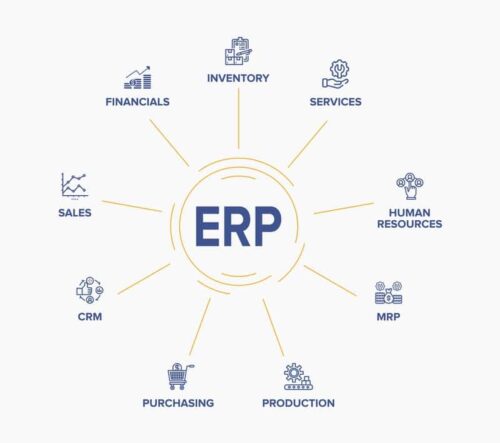
An ERP is business process management software that connects and integrates every aspect of a business — giving manufacturers visibility over their entire operation and allowing them to create better manufacturing processes, lower costs, and improve performance.

Give us a call to see how we’re different.

