We’ll explain what discrete manufacturing software is, how discrete manufacturing works, and why many manufacturers rely on ERP systems built specifically for these production environments.
Manufacturing software comes in many forms, but not all manufacturing works the same way. Discrete manufacturing software, for example, is designed specifically for manufacturers that build products from assemblies of components.
The type of products you build, and how those products are designed, assembled, and tracked, plays a big role in the kind of software your business needs.
Discrete manufacturing software supports manufacturers that produce individual, countable items. These products are typically built using assemblies of components and can often be taken apart again into their original parts.
Think of products like machines, vehicles, electronics, or fabricated metal equipment. Each finished product is made from multiple components, often assembled in stages, and tracked throughout production.
Because of this complexity, discrete manufacturers often rely on specialized ERP systems to manage engineering data, production schedules, inventory, and job costs.
What Is Discrete Manufacturing?
Discrete manufacturing refers to the production of distinct, countable products that can typically be assembled from parts and disassembled again.
Each product is built from components such as raw materials, subassemblies, and purchased parts. These components are brought together through manufacturing processes such as machining, fabrication, welding, assembly, or testing.
Examples of discrete manufacturing products include:
- Industrial machinery
- Aerospace components
- Metal fabricated products
- Electronics and electrical equipment
- Transportation equipment
Each finished product exists as a separate unit. Manufacturers can count how many units they have produced, shipped, or stored in inventory.
ERP Solutions for Manufacturers
Examples of Discrete Manufacturing Industries
Discrete manufacturing is used across many industries where products are built from components and assemblies. These products move through defined production steps before becoming finished goods. Discrete manufacturing is widely used in industries such as machinery, transportation equipment, and aerospace, which together represent a large share of manufacturing activity in both Canada and the United States.
Common examples include:
Industrial Machinery and Equipment
Manufacturers that build machines, industrial equipment, or production systems typically rely on detailed engineering designs and complex assemblies. Each machine may include hundreds or even thousands of individual components.
Metal Fabrication
Fabricators produce items such as frames, tanks, enclosures, or structural components. These products often involve cutting, bending, welding, and assembly operations.
Aerospace and Defense
Aircraft parts and aerospace assemblies require strict quality control and traceability. These products are built from precise components and must meet rigorous safety standards.
Transportation Equipment
Manufacturers producing trailers, specialty vehicles, and transportation equipment often manage large assemblies and long production cycles.
Custom Manufacturing and Engineer-to-Order
Some manufacturers design products specifically for individual customer orders. These businesses often deal with unique product configurations and engineering changes throughout the production process.
In all of these cases, products are built from structured assemblies of parts, which makes detailed production tracking essential. Across these different industries, manufacturers rely on software systems that can manage product structures, track materials, and coordinate production across multiple departments.
Different Production Models in Discrete Manufacturing
Not all discrete manufacturers operate the same way. Even though they produce countable products assembled from components, the way those products are designed and built can vary significantly.
Manufacturers typically operate under one of several production models.
Make-to-Stock (MTS)
Products are manufactured in advance and held in inventory until customers place an order. This model is common in higher-volume manufacturing environments.
Make-to-Order (MTO)
Production begins after a customer order is received. Manufacturers build the product specifically for that order, but the design is usually already defined.
Configure-to-Order (CTO)
Customers select from predefined product options that can be configured into a final product. While the components are standard, the final configuration varies by order.
Engineer-to-Order (ETO)
Products require engineering work before production begins. Designs are often customized for each project, which makes quoting, scheduling, and cost tracking more complex.
Each of these production models introduces different operational challenges, which is why many discrete manufacturers rely on ERP systems designed specifically to manage complex production environments.
How ERPs Drive Success for Every Type of Manufacturer
Challenges Discrete Manufacturers Face
Discrete manufacturing environments often involve significant operational complexity. Even relatively small manufacturers may need to manage thousands of parts, multiple production steps, and evolving engineering designs.
Without the right systems in place, these challenges can quickly create operational inefficiencies.
Complex Bills of Materials
Products in discrete manufacturing are typically built from many components organized into multi-level bills of materials (BOMs). Each assembly may contain subassemblies, purchased parts, and raw materials that all need to be tracked accurately.
Managing these structures manually can quickly become difficult, especially when product configurations vary between jobs or customers.
Engineering Changes
In many discrete manufacturing environments, product designs evolve frequently. Engineering revisions may change materials, quantities, or production steps as products are refined.
When these updates are not properly connected to production and purchasing data, teams can end up working from outdated information, which increases the risk of production errors or delays.
Job Cost Visibility
Many discrete manufacturers operate in job-based environments where every project has its own costs and timelines. Without integrated systems, it can be difficult to track the true cost of materials, labor, and overhead for each job.
Production Scheduling
Scheduling production is rarely straightforward. Machines, labor, and materials all need to be coordinated to keep jobs moving through the shop. When schedules are managed manually or across disconnected systems, bottlenecks and delays become more likely.
Inventory Accuracy
Maintaining accurate inventory records is essential in discrete manufacturing. Missing components can delay production, while excess inventory ties up capital and warehouse space.
Without reliable inventory tracking, teams may not know whether critical components are available until production is ready to begin.

How Discrete Manufacturing Software Works
Discrete manufacturing software refers to digital systems designed to support manufacturers that build products from assemblies of parts.
These systems help companies manage the flow of information across engineering, production, purchasing, inventory, and accounting. Instead of relying on separate tools or spreadsheets, manufacturers can track product data, production orders, and material requirements within a single environment.
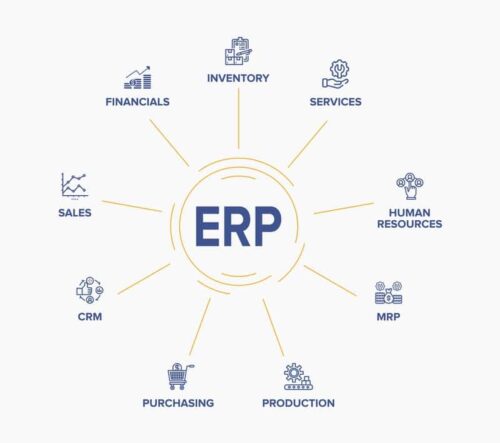
Many discrete manufacturers use ERP (Enterprise Resource Planning) systems as the central platform for managing these operations.
An ERP system connects multiple business processes, allowing teams across departments to work with the same data. Engineering teams can define product structures, production managers can schedule jobs, purchasing can manage material requirements, and finance teams can track job costs.
By connecting these processes, discrete manufacturing software helps manufacturers maintain visibility across the entire production lifecycle—from design and planning to production and delivery.
Key Features of Discrete Manufacturing ERP Software
Discrete manufacturing ERP systems typically include tools designed to manage complex product structures and production workflows.
Some of the most important capabilities include the following.
Bill of Materials (BOM) Management
The bill of materials defines the components required to build a product. ERP systems allow manufacturers to create and maintain structured BOMs that show the relationship between parts, subassemblies, and finished products.
This structure helps production teams understand exactly which components are required at each stage of the manufacturing process.
How to Make a Bill of Materials (BOM) the Right Way
Job Costing and Estimating
Many discrete manufacturers operate in project- or job-based environments where every build must be tracked individually.
ERP systems can capture the cost of materials, labor, and overhead associated with each job. This allows manufacturers to compare estimated costs with actual results and improve future quoting accuracy.
Production Scheduling
Scheduling tools help manufacturers plan production based on machine availability, labor capacity, and material availability.
Advanced scheduling capabilities allow companies to visualize workloads, prioritize critical jobs, and adjust production plans when disruptions occur.
Engineering Integration
Engineering data plays a central role in many discrete manufacturing environments. Product designs created in CAD systems often define the product structure used in production.
ERP systems that integrate with engineering tools can transfer product structures directly into bills of materials, reducing manual data entry and helping prevent errors between engineering and manufacturing.
Inventory and Material Planning
Discrete manufacturers must ensure the right materials are available when production begins.
Manufacturing ERP systems include material planning tools that analyze demand from production orders and calculate purchasing requirements. This helps manufacturers prevent shortages while reducing excess inventory.
How Discrete Manufacturing Software Supports Daily Operations
In discrete manufacturing environments, production activities often involve coordination between several departments. Engineering teams define product structures, purchasing teams source materials, production managers schedule work, and accounting tracks job costs. When these processes are managed separately, it becomes difficult to maintain a clear picture of what is happening across the business.
Discrete manufacturing software helps connect these activities so information flows more easily between departments.
For example, when engineering releases a product design, the associated bill of materials can automatically become available for production planning and purchasing. Production teams can schedule jobs based on available materials and machine capacity, while purchasing teams can see which components need to be ordered to support upcoming production runs.
As production progresses, labor activity and material consumption can be tracked against the job. This provides managers with visibility into how production is progressing and whether projects are staying within estimated costs.
Inventory systems also play an important role in daily operations. When materials are received, consumed in production, or shipped to customers, the system updates inventory records in real time. This helps reduce the risk of shortages and allows manufacturers to plan future production more accurately.
By connecting engineering, production planning, inventory management, and financial tracking, discrete manufacturing software provides a centralized view of manufacturing operations. This visibility allows manufacturers to respond more quickly to changes in demand, material availability, or production priorities.
Benefits of Discrete Manufacturing ERP Software
When implemented effectively, ERP software can provide several operational benefits for discrete manufacturers.
How ERP Systems Help Engineer-to-Order (ETO) Manufacturers
Improved Production Visibility
ERP systems provide centralized access to production data. Managers can track job progress, material usage, and production status from a single system.
Better Cost Control
Integrated job costing allows manufacturers to understand the true cost of each job. This insight helps businesses improve pricing accuracy and maintain healthier profit margins.
More Accurate Scheduling
Scheduling tools help production teams coordinate machines, labor, and materials more effectively. With greater visibility into workloads and capacity, manufacturers can improve on-time delivery performance.
Improved Inventory Management
ERP systems maintain detailed inventory records and track materials throughout purchasing, production, and shipping processes. This helps improve inventory accuracy and reduces the risk of production delays caused by missing components.
Stronger Coordination Across Departments
Because ERP systems connect multiple business functions, teams across engineering, production, purchasing, and finance can work from the same data.
For manufacturers managing complex assemblies, engineering revisions, and job-based production, ERP systems designed specifically for discrete manufacturing can provide the operational visibility needed to run production more efficiently.
Final Thoughts
Discrete manufacturing involves building complex products from structured assemblies of components. Managing these operations requires careful coordination across engineering, production, purchasing, and inventory management.
As products become more complex and supply chains more demanding, many manufacturers turn to ERP systems designed specifically for discrete production environments.
Discrete manufacturing software helps companies organize product data, plan production, track costs, and maintain visibility across their operations.
For manufacturers looking to improve efficiency and gain better control over their processes, the right ERP system can provide a strong operational foundation.
Take the Virtual Tour of Genius ERP
Explore how manufacturers manage engineering, production scheduling, inventory, and job costing in one connected system. Take the tour here: Genius ERP Virtual Tour
Get your eBook Scared to implement a new ERP?
"*" indicates required fields