Article

The Future of Manufacturing Scheduling

Custom Manufacturing, Integration, Scheduling - All industries

Business man with Gantt chart

Manufacturing scheduling has always required planners to balance competing priorities, limited resources and changing production conditions. But that job is becoming increasingly difficult as manufacturers manage shorter lead times, more customized products and ongoing pressure on labor, materials and capacity.

For custom manufacturers in particular, even a carefully prepared schedule can change quickly. Rush orders, engineering revisions, material delays, equipment problems and employee absences can all affect what the shop can produce and when. A decision involving one job may also influence several others, forcing planners to continually assess priorities, capacity and delivery commitments.

Traditional scheduling methods are not well-suited to this level of change. Spreadsheets and static plans can provide an initial picture of production, but they quickly lose value when they rely on estimates or information gathered separately from engineering, purchasing, inventory and the shop floor.

The future of manufacturing scheduling is not about creating one perfect plan and expecting production to follow it exactly. It is about combining connected ERP data, advanced scheduling methods and AI tools to create realistic schedules and respond more quickly when circumstances change.

ERP data provides a current view of the operation, methods such as Drum-Buffer-Rope organize work around production bottlenecks, scenario testing helps planners assess proposed changes, and AI can draw attention to emerging problems. Together, these capabilities make manufacturing scheduling more practical, flexible and responsive.


In this article:

Learn how manufacturers can create more realistic and responsive production schedules using connected ERP data, advanced scheduling methods, scenario testing and AI. We also explore how these tools help planners manage constraints, identify problems earlier and respond to changing shop-floor conditions.

How to Create a Realistic Manufacturing Schedule

Manufacturing scheduling turns a production plan into a sequence of work. It determines which jobs and tasks should be completed, when they should begin, which people and machines should perform them and what materials must be available.

A good schedule must account for more than available hours. It needs to consider job priorities, promised delivery dates, machine and labor capacity, employee skills, material availability, setup requirements and the relationships between operations. It must also reflect the way work is actually moving through the shop.

This is especially challenging for custom manufacturers. Make-to-order, configure-to-order and engineer-to-order companies may be building a product for the first time. Production times are often estimates, engineering may still be underway, and customers may request changes after the job has started.

A manufacturing schedule cannot be treated as a fixed answer. It is a working plan that must be updated as better information becomes available and conditions on the shop floor change.

Why Traditional Scheduling Falls Short

Traditional scheduling methods often try to calculate detailed start and finish times for every operation. In a predictable, repetitive environment, this approach can work reasonably well. In a custom shop, the amount of uncertainty makes that level of precision much harder to maintain.

The schedule may be technically accurate when it is first created, but production does not stand still. A late material delivery can hold up an assembly. An operation can take longer than expected. An urgent repair can take a machine out of service. A new order can suddenly become the top priority.

When scheduling information is kept in spreadsheets or separate systems, responding to these changes becomes even more difficult. A planner may know that a job needs to move forward but not be able to see what materials it requires, whether the right employees are available or which other customer orders will be delayed as a result.

Frequent manual rescheduling can also create confusion. If priorities change without a clear way to communicate them, employees may keep working from an outdated list or choose whichever job appears most urgent. Modern scheduling must help the entire shop understand what matters now.

Use Connected ERP Data to Build a Better Schedule

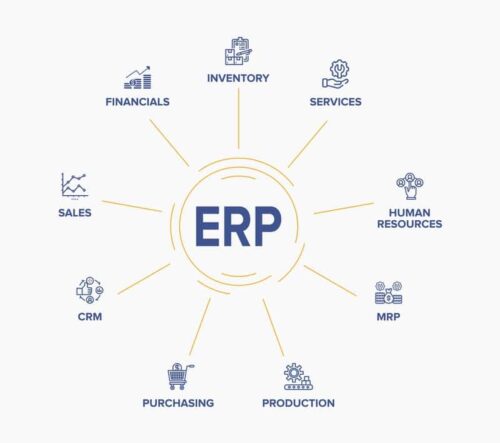
A reliable schedule depends on reliable information. When scheduling is integrated into a connected ERP system, planners can work with information from across the operation rather than gathering it manually from different departments.

Sales orders and customer commitments establish demand. Engineering provides bills of materials and routings. Purchasing and inventory records show whether required components are available. Employee and machine calendars establish capacity. Shop-floor updates show what has been completed, what is in progress and where work may be falling behind.

Bringing this information together gives planners a more complete view of production. It becomes easier to answer practical questions: Is the material available? Does the job require an employee with a particular qualification? Is a critical machine already overloaded? Will changing one delivery date affect three others?

Real-time visibility is especially important when conditions change. Instead of rebuilding a schedule from outdated information, planners can see current production status and adjust priorities using the best information available.

Connected scheduling also improves communication. When the schedule and shop-floor system draw from the same operational data, employees can see which tasks should come next without relying on printed lists, informal conversations or a spreadsheet that only one person controls.

This shared operational data also provides the foundation for AI-assisted scheduling. With access to current information about orders, materials, capacity and shop-floor progress, AI tools can identify patterns and potential problems that may require attention. Without that connection, their analysis may be based on an incomplete picture of production.

Match Your Schedule to the Way You Manufacture

There is no single scheduling method that fits every manufacturer. The right approach depends partly on how and when demand enters the business.

Make-to-stock manufacturers produce standardized goods in anticipation of future sales. Their schedules are shaped by demand forecasts, historical sales, desired stock levels and available production capacity. They must produce enough to meet expected demand without tying up too much cash in excess inventory.

Make-to-order and configure-to-order manufacturers schedule primarily around confirmed customer orders. They need to coordinate promised dates, materials, selected options and capacity while keeping lead times under control.

Engineer-to-order manufacturers face another layer of uncertainty. Designs may still be evolving while long-lead materials need to be purchased and early production work begins. Engineering milestones, changing bills of materials and incomplete production estimates all affect the schedule.

Many manufacturers also operate in more than one mode, such as building standard components to stock while completing final assembly after receiving an order. Scheduling systems need to reflect these differences and create plans based on the operation’s real demand, resources and constraints.

The scheduling method may differ, but every manufacturer needs the same basic foundation: reliable demand information, current material and capacity data, and a clear way to prioritize work. The scheduling system must be flexible enough to reflect how the business actually produces, whether work begins with a forecast, a customer order or an engineering project.

Build the Schedule Around Your Production Constraints

One of the most important ideas in manufacturing scheduling is that the output of the whole shop is limited by its constraints.

A production bottleneck occurs when work arrives at a resource faster than the resource can process it. The bottleneck may be a machine with a persistent queue, an inspection station that cannot keep up, an assembly waiting for long-lead components or an engineering department that takes longer than production can afford to wait.

Some bottlenecks are temporary. An employee absence or short equipment failure may create a backlog that disappears once normal capacity returns. Other constraints are persistent and continue to limit production week after week.

Keeping every resource busy does not solve this problem. Producing more work upstream of a bottleneck can increase work in process without increasing the number of finished jobs. Parts simply wait longer for the constrained resource.

The better approach is to identify what currently controls output and organize production around it. This is the principle behind Drum-Buffer-Rope scheduling.

How Drum-Buffer-Rope Scheduling Works

Drum-Buffer-Rope, or DBR, is a scheduling method based on the Theory of Constraints. It recognizes that one or a limited number of resources set the pace for the entire production system.

Smart Scheduling

The method has three main elements:

  • The drum is the constraint. Its available capacity establishes the pace at which the shop can produce.
  • The buffer protects critical parts of the schedule from normal variation, helping ensure that the constraint is not left waiting for work and that delivery commitments are protected.
  • The rope controls when work is released into production so the shop does not create more work in process than the system can handle.

The Three Elements of Drum-Buffer-Rope Scheduling

The drum: The production constraint that sets the pace for the entire shop.

The buffer: Protection placed around critical points in the schedule to absorb normal variation and help keep production moving.

The rope: The mechanism that controls when work is released so the shop does not create more work in process than it can handle.

Instead of trying to maximize the utilization of every individual machine, DBR focuses on improving flow through the entire shop. The schedule is built around the constraint, and other resources are aligned with its pace.

This approach is a good fit for custom manufacturing because it does not require every production estimate to be exact. The schedule still uses operational data, but it acknowledges that uncertainty and variation are unavoidable. Buffers help absorb that variation, while clear priorities tell employees which work needs attention.

DBR also changes the way manufacturers think about bottlenecks. If one constraint is resolved, another resource will eventually become the new constraint. The objective is to manage the current constraint, protect production flow and keep improving the system.

For the shop floor, the result is a clearer set of priorities. Employees spend less time deciding which job appears most urgent and more time working on tasks that support overall production flow and delivery performance.

Use What-If Scheduling to Test Production Changes

Even the best production schedule will need to change. The challenge is understanding the consequences before new priorities are released to the shop floor.

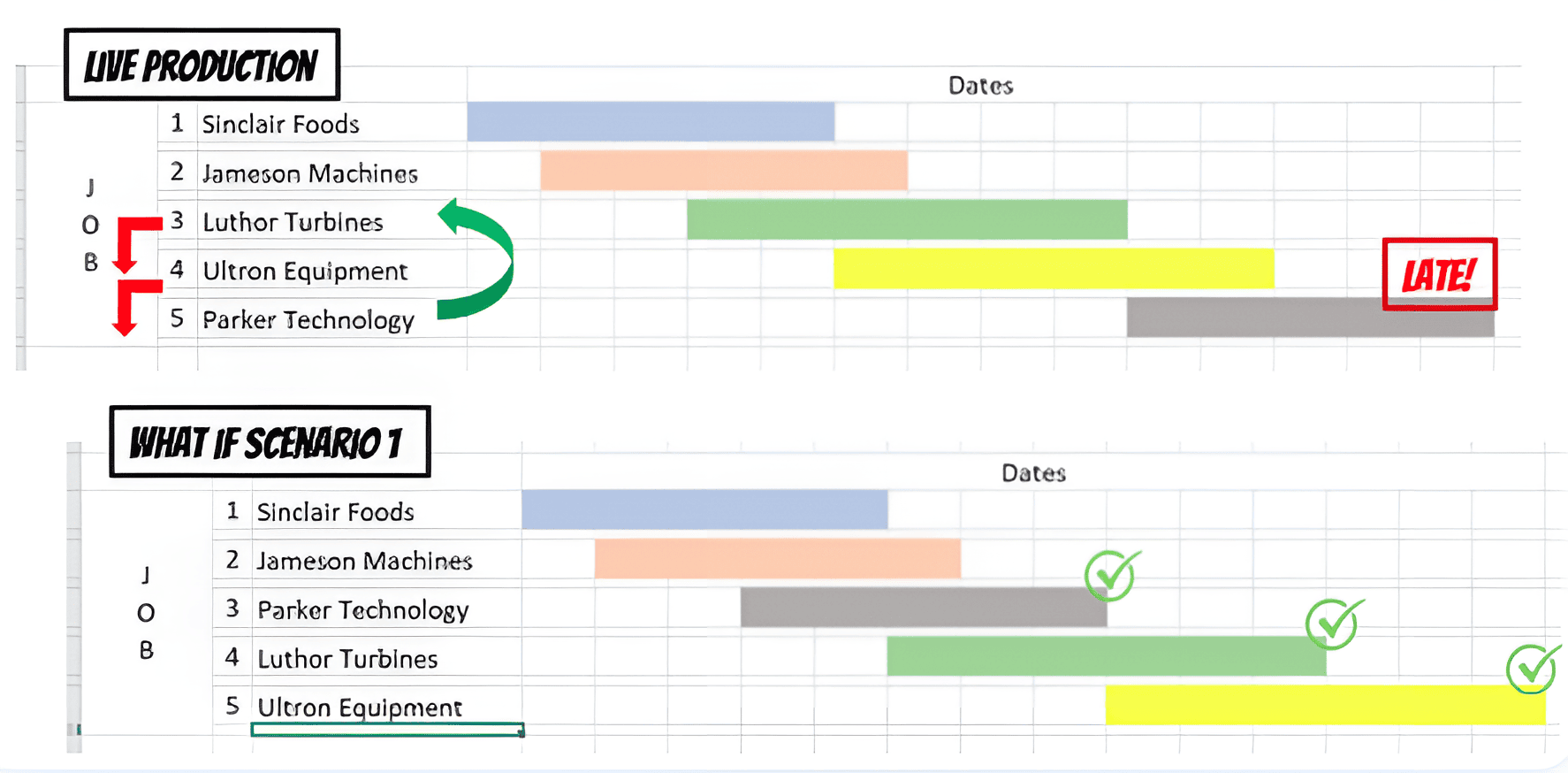
Consider a customer who asks whether an important order can be delivered two weeks earlier. Moving that job forward may appear possible when viewed on its own. But the decision could require material that has not arrived, overload a critical work center or push several existing orders past their promised dates.

What-If Scheduling allows planners to test the change in a separate scenario before altering the active production schedule. They can simulate adding or moving a job, changing a priority or committing to a proposed delivery date, then review how the decision would affect the rest of the operation.

A useful simulation should consider more than dates. It should show the effect on shop-floor loading, production milestones, material requirements and other customer orders. If the first scenario does not work, planners can test another option until they find a better balance.

This gives manufacturers a more informed way to respond. Instead of saying yes and discovering the consequences later, the planner can assess whether the new promise is realistic. Manufacturers can also evaluate unreleased orders against capacity and material requirements, giving sales teams better information about achievable delivery dates.

What-If Scheduling does not remove uncertainty, but it makes the effects of a decision more visible. That helps manufacturers adjust the schedule with greater confidence and less disruption.

How AI Helps Manufacturers Identify Scheduling Problems Earlier

Many scheduling problems provide warning signs before they cause a serious delay. The challenge is recognizing those signals early enough to act.

Current production data can reveal that an operation is falling behind, required material will not arrive on time or a queue is building in front of a critical resource. Historical results can also show where estimates are consistently inaccurate, helping manufacturers create better schedules for similar work in the future.

AI can help planners make sense of this information by monitoring production, identifying unusual activity and drawing attention to jobs that may require action. It can also help planners compare different scheduling options and understand how a change to one job could affect other priorities and delivery dates.

Should Your Next Hire Be an AI Agent?

These tools do not replace the experience of a skilled production planner. People still understand the customer commitments, employee capabilities and day-to-day realities behind the schedule. Technology gives them earlier warnings and clearer information so they can spend less time finding problems and more time deciding how to solve them.

Create a Manufacturing Schedule That Adapts to Your Operation

Manufacturers will always face uncertainty. Machines will break down, priorities will shift, materials will arrive late, and production times will vary. A stronger scheduling system does not pretend these disruptions can be eliminated. It helps the business respond without losing control of the shop.

The future of manufacturing scheduling is connected to the rest of the operation, built around real production constraints and flexible enough to adapt as conditions change. Connected data and AI help planners identify emerging problems, while advanced scheduling methods and scenario testing help them decide how to respond. The result is clearer priorities for employees, better-informed decisions for planners and more dependable commitments for customers.

Genius ERP’s Smart Scheduling brings production data, Drum-Buffer-Rope scheduling, and What-If capabilities together in a single manufacturing ERP. Creating a schedule around how your shop actually operates helps you manage constraints, respond to change and keep work moving toward the jobs that matter most.

Want to see how Smart Scheduling can work in your shop? Request a demo of Genius ERP.

Get your eBook Scared to implement a new ERP?

"*" indicates required fields

This field is for validation purposes and should be left unchanged.
close-btn

Let’s talk about your shop