Article

ERP Forecasting & Demand Planning for Manufacturers: How to Plan with Greater Visibility

Engineering, ERP - All industries

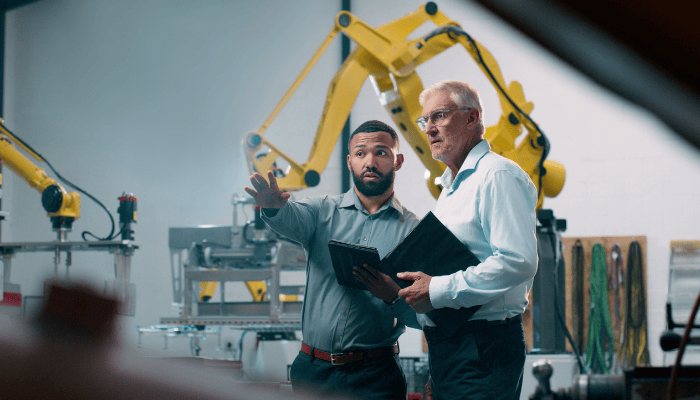
A manufacturer working on the shop floor using a tablet.

Planning in manufacturing — especially custom manufacturing — often starts with the backlog.

Open orders, jobs already in progress, material on hand, and supplier lead times all shape what can realistically be built next. Production, purchasing, and sales are constantly looking ahead — sometimes weeks, sometimes months — trying to keep demand, capacity, and inventory in balance.

As operations grow more complex, those decisions get harder to manage. Spreadsheets, disconnected systems, and gut feel can only take teams so far. That’s where ERP forecasting and demand planning come into play — not as abstract concepts, but as practical tools for bringing structure and shared visibility to planning decisions that are already happening every day.

In This Article

We break down what demand planning and ERP forecasting really mean in a manufacturing context, how they work together, and why they matter for running a more predictable planning environment.

What Is Demand Planning in Manufacturing?

In manufacturing, demand planning is the process of figuring out what customers are likely to need and translating that into actionable plans for production, inventory, and purchasing.

It’s not just about guessing future sales. Demand planning connects expected demand to real constraints, such as:

  • How much you can produce
  • What materials you need and when
  • Supplier lead times
  • Available labor and capacity
  • Inventory already on hand

In other words, demand planning answers the question: Given what we expect customers to order, what do we need to do internally to meet that demand?

For manufacturers, this planning touches nearly every part of the business. When demand planning is off, the ripple effects show up quickly — excess inventory, missed delivery dates, rushed orders, and frustrated teams.

As long as volumes are low and operations are simple, many manufacturers can manage this planning with spreadsheets and experience. But as product mix expands, lead times stretch, and more teams get involved, it becomes harder to keep everyone working from the same assumptions.

Information starts to live in different places, updates lag behind reality, and planning decisions become more reactive than intentional. At that point, relying on spreadsheets and disconnected tools starts to break down — and manufacturers need a more connected way to plan.


What Is ERP Forecasting?

ERP forecasting uses the operational data already inside your ERP system to estimate future demand and guide planning decisions across the business.

Unlike standalone forecasting tools or spreadsheets, ERP forecasting draws from shared operational data that reflects how the business actually operates. Because ERP systems connect core functions across the organization, forecasts are built using the same information teams rely on every day — not disconnected data sources or manually updated files. Sales orders, backlog, inventory levels, purchasing activity, and production capacity all feed into the picture, helping teams plan based on real demand and real operational constraints.

Without that shared foundation, forecasts often rely on partial data — which can lead to material shortages, excess inventory, or production plans that were never realistic to begin with.

The goal isn’t to predict the future perfectly. It’s to give manufacturers a more reliable starting point for planning — one that everyone can see and work from.

Key Components of ERP Forecasting

In a manufacturing ERP, forecasting is informed by operational data such as:

  • Historical demand
    Past sales, shipments, and order patterns help establish trends and seasonality.
  • Sales orders and backlog
    Open orders and quotes provide visibility into committed and potential demand.
  • Inventory levels
    What’s already in stock matters just as much as what’s coming in.
  • Lead times
    Supplier and production lead times shape how far ahead planning needs to happen.
  • Production capacity
    A forecast only adds value if it reflects what can realistically be built.

By combining these elements, ERP forecasting creates a more complete picture than any single spreadsheet or department can provide on its own.

How ERP Forecasting Supports Manufacturing Operations

ERP forecasting becomes valuable when it’s tied directly to how manufacturers plan and execute work.

Connecting Demand Planning to Production Planning

For production teams, forecasting answers one simple but critical question: What should we be building, and when?

When demand forecasts live inside the ERP, production planning can be aligned with expected demand rather than reacting to last-minute changes. Schedulers gain earlier visibility into demand, plan capacity more effectively, and reduce the constant cycle of expediting and rescheduling.

This doesn’t eliminate change — manufacturing rarely stands still — but it does make change easier to manage. Instead of constantly adjusting the schedule, teams can make more deliberate planning decisions and respond to change with greater control.

schema blue background texture

Engineering and Production Plans: How to Build Better Workflows with the Right ERP

ERP Forecasting and Inventory Planning

Inventory is one of the most visible areas where forecasting decisions show up.

Poor demand planning often leads to one of two extremes: Too much inventory tying up cash and space, or too little inventory causing delays and rush orders.

ERP forecasting supports demand and inventory planning by helping manufacturers balance supply with expected demand. Instead of relying on gut feel or static reorder points, planners can use forecast data to make more informed decisions about what to stock and when to replenish.

The result is not “perfect” inventory, but fewer surprises.

ERP Forecasting Across the Supply Chain

Manufacturing doesn’t happen in isolation. Suppliers play a huge role in whether plans succeed or fall apart.

ERP forecasting helps purchasing teams anticipate material needs earlier, especially for long lead-time items. With better visibility into upcoming demand, manufacturers can:

  • Place orders earlier
  • Avoid emergency purchases
  • Communicate more clearly with suppliers
  • Reduce last-minute changes that strain relationships

In supply chain management, forecasting is less about prediction and more about preparedness.

Types of Forecasting Used in Manufacturing ERPs

Manufacturers don’t rely on a single forecast. ERP systems typically support multiple forecasting perspectives that serve different purposes.

Demand Forecasting

Demand forecasting focuses on estimating customer demand based on historical patterns, current orders, and known trends.

This is often the foundation for planning. It helps answer questions like:

  • How much demand do we expect next month or next quarter?
  • Are certain products trending up or down?
  • How volatile is demand compared to last year?

In manufacturing, demand forecasts need to be revisited regularly. Markets shift, customers change plans, and forecasts must evolve accordingly.

Sales Forecasting

Sales forecasting looks at expected revenue and sales activity, often driven by the sales pipeline and quoting activity.

Sales forecasts are important, but on their own they’re not enough for manufacturers. A strong sales forecast still needs to be translated into production, material, and capacity plans. ERP systems help connect these dots so sales expectations don’t live in isolation.

Common Challenges Manufacturers Face with Forecasting

Even with the right tools, forecasting in manufacturing is challenging. Some of the most common issues include:

  • Demand volatility
    Customer orders change, projects get delayed, and priorities shift.
  • Disconnected systems
    Sales, production, and purchasing using different tools leads to conflicting data.
  • Incomplete or unreliable data
    Forecasts are only as good as the information behind them.
  • Long and variable lead times
    The further out you need to plan, the more uncertainty you face.
  • Capacity constraints
    Forecasted demand doesn’t always align with available resources.

ERP forecasting doesn’t eliminate these challenges, but it does help manufacturers manage them more effectively by improving visibility and coordination.

How ERP Helps Address Forecasting and Demand Planning Challenges

What ERP systems do well is create a shared planning foundation.

Instead of each department working from its own version of the truth, ERP forecasting brings demand, inventory, production, and purchasing data into one system. This makes it easier to:

  • See how changes in demand affect the rest of the operation
  • Adjust plans before problems reach the shop floor
  • Align teams around the same assumptions
  • Make informed trade-offs when constraints appear

ERP forecasting supports better conversations as much as better calculations.

Best Practices for ERP Forecasting and Demand Planning in Manufacturing

Manufacturers that get the most value from ERP forecasting tend to follow a few consistent practices.

First, they aim for useful forecasts, not perfect ones. A forecast that’s directionally accurate and regularly updated is far more valuable than one that looks precise but never changes.

Second, they review and adjust forecasts frequently. Demand planning is an ongoing process, not a once-a-year exercise.

Third, they align sales, operations, and purchasing. Forecasts work best when departments collaborate instead of working in silos.

Finally, they combine system data with human judgment. ERP forecasting provides structure and visibility, but experienced teams still play a critical role in interpreting and adjusting plans.

Why ERP Forecasting Matters for Long-Term Manufacturing Growth

As manufacturing businesses grow, planning complexity increases. More products, more customers, more suppliers, and longer lead times all make forecasting harder — but also more important.

ERP forecasting helps manufacturers scale by:

  • Improving service levels and delivery performance
  • Reducing excess inventory and working capital strain
  • Creating more predictable production schedules
  • Supporting better decision-making as the business evolves

It’s not about predicting the future with certainty. It’s about giving manufacturers a clearer view of what’s ahead and the ability to respond with confidence.

Final Thoughts

Manufacturers may not always talk about demand forecasting or demand planning in formal terms, but they deal with the outcomes of those processes every day — on the shop floor, in purchasing decisions, and in the production schedule.

ERP forecasting brings structure, visibility, and shared understanding to planning decisions that are already happening across the business, often informally. When done well, it helps teams move from reacting to demand after the fact to planning for it with more intention and control.

In an industry where uncertainty is a constant, that shift doesn’t eliminate challenges — but it does make them easier to anticipate, communicate, and manage.

Get your eBook Scared to implement a new ERP?

"*" indicates required fields

This field is for validation purposes and should be left unchanged.
close-btn

Let’s talk about your shop

We’ll get back to you within one business day.
No spam, just a real conversation.