



Going live with your ERP isn’t the finish line — it’s closer to the starting gun. That’s the framing Frank and Carson Coles use for this podcast-style conversation about everything that happens after implementation. They open with a simple but uncomfortable stat: only about 10% of companies using a modern ERP ever actually reach what they call the “maturity” phase, and roughly a quarter of go-lives fail — usually not because the software was wrong, but because the follow-through (what they call hypercare, then continuous improvement) never happened. Frank and Carson walk through what that post-go-live curve typically looks like — stabilization, maturity, expansion — and get specific about the kinds of projects that tend to show up in that second phase: better scheduling and on-time delivery, real reporting and bottleneck visibility, automating repetitive multi-step tasks, and increasingly, going paperless. They also spend real time on the human side: how to build user adoption without burning goodwill, why celebrating small failures openly can be more useful than perfect training, and when it’s worth reassessing priorities rather than pushing through. Along the way they introduce Genius’s own post-implementation offering — a dedicated strategic advisor with a banked-hours package — plus a preview of where Genius is headed with AI and agentic tools inside the ERP. If your team went live and then… stopped, this conversation is aimed squarely at you.
What You’ll Learn In This Webinar
Chapter 1 — The Continuous Improvement Cycle
Frank and Carson describe a study on what typically happens after go-live: an initial “hypercare” or stabilization period where hand-holding is essential, followed by a maturity curve where teams get comfortable — though “comfortable” can also mean people quietly falling back to old, easier habits rather than fully using the new system as scoped.
Chapter 2 — Expansion and Maturity
As people get more comfortable, they often start pushing beyond the original scope, asking “could this also do X?” — which kicks off an expansion phase, either reassessing how work is done or simply doing more with what’s already in place. Frank cites a statistic that stuck with him: only about 10% of companies using a modern ERP actually reach that maturity phase.
Chapter 3 — The Importance of Continuous Evolution
Frank stresses that teams are never really “done” — employee needs and business realities keep shifting. He cites research showing roughly 25% of go-lives fail, largely from a lack of post-go-live optimization, alongside cited figures of about 70% improved data quality and 133% average ROI after implementation — with those who actually reach maturity getting far more value, something Frank says is backed up by Genius’s own published case studies.
Chapter 4 — Standardization and Measurement
Carson explains that implementation’s first real value is standardizing data collection — you can’t identify big wins until you have a consistent way to measure what’s happening. Frank adds that this also breaks down silos and creates forced accountability between departments, since actions in the system are now visible to everyone rather than hidden in someone’s personal spreadsheet.
Chapter 5 — Common Post Implementation Opportunities
Carson runs through the recurring themes: improving scheduling and on-time delivery, adding reports and metrics (referencing the DBR/bottleneck methodology they favor), and automating repetitive multi-step tasks so people only need to manage the exceptions rather than every routine step.
Chapter 6 — Digitalization and Automation Trends
Carson notes paper’s practical downsides as a “quality control nightmare” compared to digital tracking. Frank points to Genius’s growing set of out-of-the-box integrations (drawing-based estimating, nesting, document management) built on its APIs, plus the newly released Cortex chatbot — which he says gives a genuinely useful, detailed answer roughly one time in three and points users to Genius Academy, something he sees as a real step toward user self-sufficiency.
“Sentiment is infectious.” — Carson
Chapter 7 — Managing User Adoption
Frank frames this as making sure people know what the next step is and feel ready for it. Simple scorecards — like how many orders someone enters per week, or how often a timesheet needs correcting — can flag comfort level during hypercare without needing anything elaborate.
Chapter 8 — Learning from Failures
Frank shares that formal soft-skills training for identifying “champion” personalities didn’t really stick as a paid service, though consultants still use those instincts informally. He also describes a customer who ran a weekly “biggest fail of the week” share-out — which surfaced a costing method allowing negative inventory that nobody had noticed, fixed early because people felt safe admitting mistakes rather than hiding them.
Chapter 9 — The Role of Strategic Advisors
Carson and Frank note it’s fine to step back and reprioritize instead of forcing an approach that isn’t landing — and that ignoring employee-driven ideas often backfires, pushing people to quietly build their own shadow tools in Excel that undermine the ERP’s single-source-of-truth goal. On customization versus standardization, Frank explains Genius keeps its core system standardized for data integrity, while still offering triggers, Power Automate, webhooks, and APIs for automation — some customers have built their own web interfaces for production tracking or quick order entry. This leads into Genius’s strategic-advisor offering: keeping the same dedicated consultant after go-live, with a banked-hours package, quarterly reviews, and a shared project-tracking system for action items — available at a limited-time discount for anyone who mentions this webinar before year-end.
Chapter 10 — Future Proofing Your ERP System
Carson defines future-proofing as avoiding getting locked into heavy customization that becomes hard to unwind later. Frank tells a trade-show story about a customer who didn’t realize their decade-old, unupgraded version of Genius was effectively a different piece of software — contrasting that with Genius’s current “keep it up” plan that auto-updates customers to the newest version at no extra fee.
Chapter 11 — Balancing Customization and Standardization
Carson compares over-customizing to bolting too many accessories onto a bike — the more you add, the more likely something eventually breaks. Standard tools stay supported and evolve automatically, and Frank notes Genius’s roughly ten active integration partners (including CAD2BOM with Inventor/SolidWorks, HubSpot, and tax/payment connectors) are making third-party integration increasingly plug-and-play. Frank also previews Genius’s growing work on agentic AI, teasing an upcoming keynote session hosted by Christian Pouliot specifically on what AI/agentic tools can (and can’t yet) do inside the ERP.
Chapter 12 — Conclusion and Next Steps
Frank points attendees to a QR code for booking a free business review with the customer success team — separate from the paid strategic-advisor program — open to anyone wanting to talk through their roadmap, whether they’re mid-implementation or well past go-live.
Chapter 13 — Upcoming Open Mic Session Announcement
Frank announces a live open-mic follow-up session the following week for existing customers, where he and Carson will ask attendees directly about their post-implementation priorities and take questions in real time.
Chapter 14 — Engagement and Customer Feedback
In closing Q&A: the strategic-advisor package includes roughly 16 hours per quarter (about 10 of which are dedicated support), scoped flexibly with your consultant; free business reviews are available to both new and existing customers through customer success; and Frank shares a shortened list of common automations from a past webinar — exchange rate updates, routing-time averages, BOM updates, standard cost/price list updates, and attachment automation (auto-linking work instructions, scanned test reports/MTRs, drawings, or G-code to the right job) — alongside a growing roster of roughly ten active integration partners.
FAQ
Why do most ERP implementations never reach full maturity?
Cited research says only about 10% of companies using a modern ERP reach that maturity phase, and roughly 25% of go-lives fail outright — usually from a lack of follow-through on optimization after go-live, not a problem with the software itself.
What's a simple way to track user adoption after go-live?
Basic scorecards work well — things like how many transactions someone enters per week, or how often their timesheet needs manual correction, can flag comfort level without needing anything elaborate.
What does Genius's strategic-advisor program actually include?
A dedicated consultant kept on after implementation, roughly 16 hours per quarter (about 10 of which are dedicated support), quarterly reviews, and a shared project-tracking system for action items — offered at a limited-time discount if booked by year-end.
Is a free business review only available to brand-new customers?
No — both new and existing customers can request one through the customer success team, regardless of where they are in their implementation.
Does Genius support customizing the system, or should we stay standard?
Genius keeps its core system standardized to protect data integrity, but offers triggers, Power Automate, webhooks, and APIs for automation — and has a growing roster of roughly ten integration partners (CAD2BOM/SolidWorks, HubSpot, tax and payment connectors, and more) that make third-party integration increasingly plug-and-play.

Get your eBook Scared to implement a new ERP?
"*" indicates required fields
Explore related articles

How will Artificial Intelligence Impact ERP Software?
AI technology built directly into ERP systems can help automate routine processes or create better user experiences by learning and adapting to user's language, allowing systems to better understand and respond to users.
What’s New in the HubSpot–Genius ERP Integration
See how our integration with HubSpot connects customer information, quotes and sales orders across both systems.
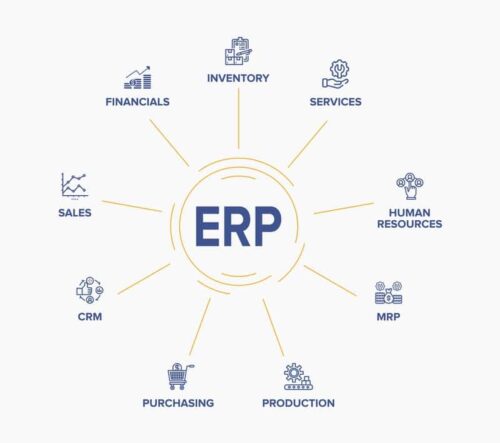
Back To Basics: What Is an ERP?
An ERP is business process management software that connects and integrates every aspect of a business — giving manufacturers visibility over their entire operation and allowing them to create better manufacturing processes, lower costs, and improve performance.

A manufacturing ERP that works as hard
as you do.
Give us a call to see how we’re different.

