



Related webinar
Share article

Most manufacturers are facing the same recruitment challenges. Vacancies remain difficult to fill, while experienced employees spend too much time on routine administrative tasks. Recruiting takes time, onboarding requires support from people who are already busy, and even after finding the right person, there’s no guarantee they’ll stay.
But administrative work doesn’t stop because a role is difficult to fill. Customer orders still need to be entered, overdue invoices still need to be chased, and supplier confirmations still need to be monitored. Those responsibilities are often shared across customer service, finance, sales and operations teams, leaving less time for the work those employees were actually hired to do.
The obvious solution is to recruit another member of staff. But what if the work doesn’t actually require hiring someone?

Advances in artificial intelligence (AI) are giving manufacturers another option to consider. Instead of recruiting someone to carry out routine, process-driven work, businesses are beginning to explore whether an AI agent could take on those responsibilities instead.
AI agents aren’t designed to replace experienced employees. They’re designed to handle repetitive administrative tasks, follow established business rules and complete work consistently, allowing employees to focus on customer relationships, problem-solving and the decisions that require experience.

In this article
Learn what AI agents are, how they differ from other AI tools and why manufacturers are beginning to think differently about recruiting for repetitive administrative work. Explore where AI agents can deliver the greatest value, how to identify suitable processes for automation and why starting with one clearly defined task is often the best place to begin.
The Recruitment Challenge Goes Beyond Skills Shortages
Finding skilled employees has become increasingly difficult for many manufacturers, but recruitment isn’t the only challenge businesses are facing.
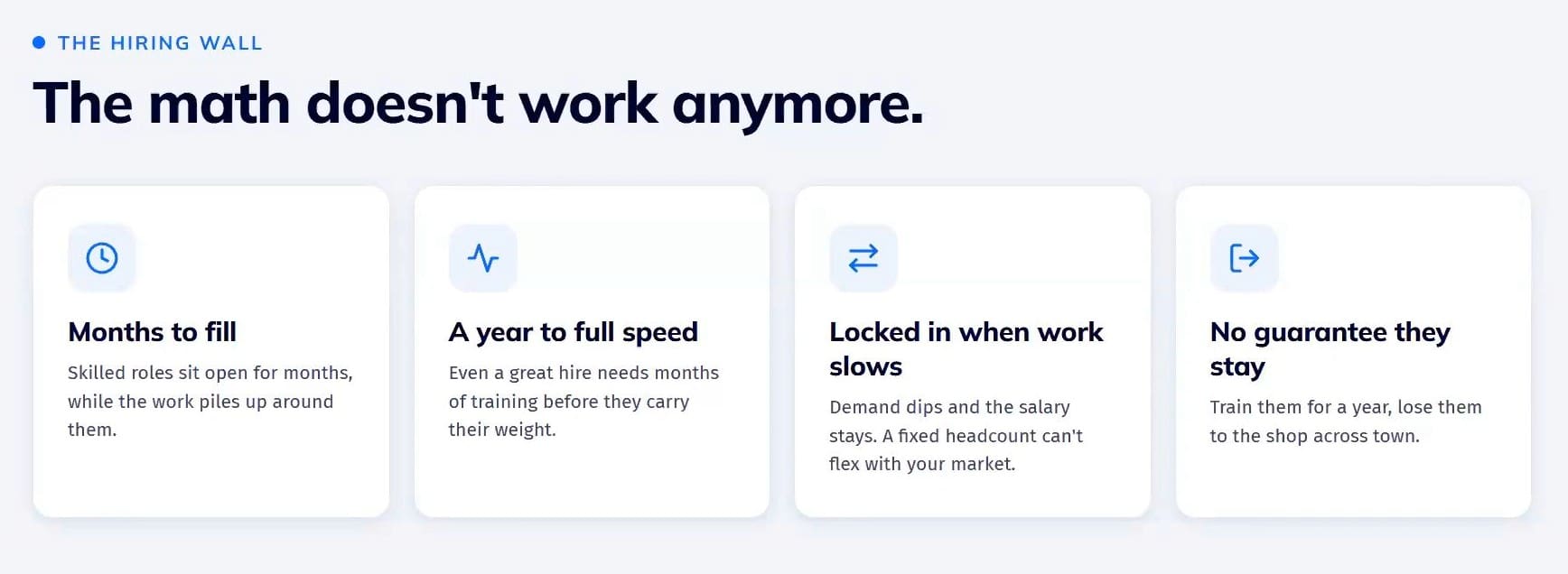
Recruiting, onboarding and training all require time from experienced employees who are already balancing heavy workloads. Bringing a new person into the business is also a significant investment, and when demand fluctuates, staffing costs remain the same even if workloads become quieter.
That’s one reason why it’s worth asking whether every repetitive administrative task really requires another member of staff. If a process follows established business rules, occurs hundreds of times each week and doesn’t require specialist knowledge or complex decision-making, is recruiting another employee always the best solution?
Not Every Task Needs a Person
Let’s be clear: AI isn’t a replacement for skilled manufacturing employees.
Engineering decisions rely on engineering expertise. Building strong customer relationships depends on people. Production planning, problem-solving and strategic decision-making all require experience, judgement and industry knowledge.
At the same time, every manufacturer has routine administrative tasks that follow the same process day after day. While these activities are essential, they often take valuable time away from employees whose skills are better used elsewhere.
An AI agent is an AI-powered system that’s designed to carry out a specific role. Rather than acting as a general-purpose chatbot, it’s trained to follow defined business rules, work with company data and complete a specific process, such as entering customer orders.
Take order entry as an example. Every customer purchase order follows a similar process. Someone receives the email, opens the attachment, checks the customer details, verifies part numbers and quantities, enters the information into the ERP system and reviews anything that appears out of the ordinary. It’s an important process, but much of the work follows established business rules, making it well suited to an AI agent.

Think About AI the Same Way You Think About Recruitment
Many businesses still think of AI as another software tool that employees use to complete their work. AI agents are different. Rather than adding another application to your technology stack, think of an AI agent as taking on a specific role within the business.
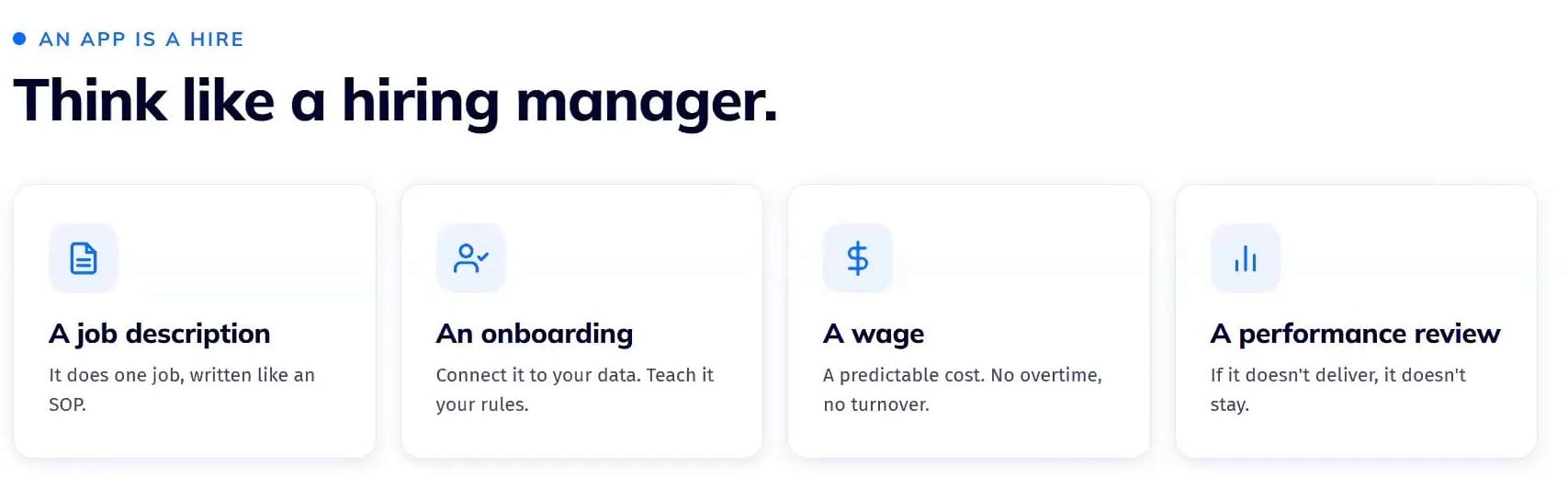
When recruiting a new employee, you first decide what the role involves, what skills are needed and how success will be measured. The same principle applies when introducing an AI agent. Instead of starting with the technology, start with a clearly defined responsibility and the routine tasks that make up the role. Once you’ve identified those, an AI agent can be configured to carry out the work.
To be effective, an AI agent also needs the same foundations as any new member of staff. It needs clear instructions, access to the right business information and an understanding of the processes and business rules it should follow. It also needs clear objectives so its performance can be monitored and improved over time.
Approaching AI in this way helps manufacturers introduce automation gradually, measure the results and build confidence before expanding into other areas of the business.
What Does an AI Agent Actually Do?
Let’s return to the order entry example to see what an AI agent can do in practice.
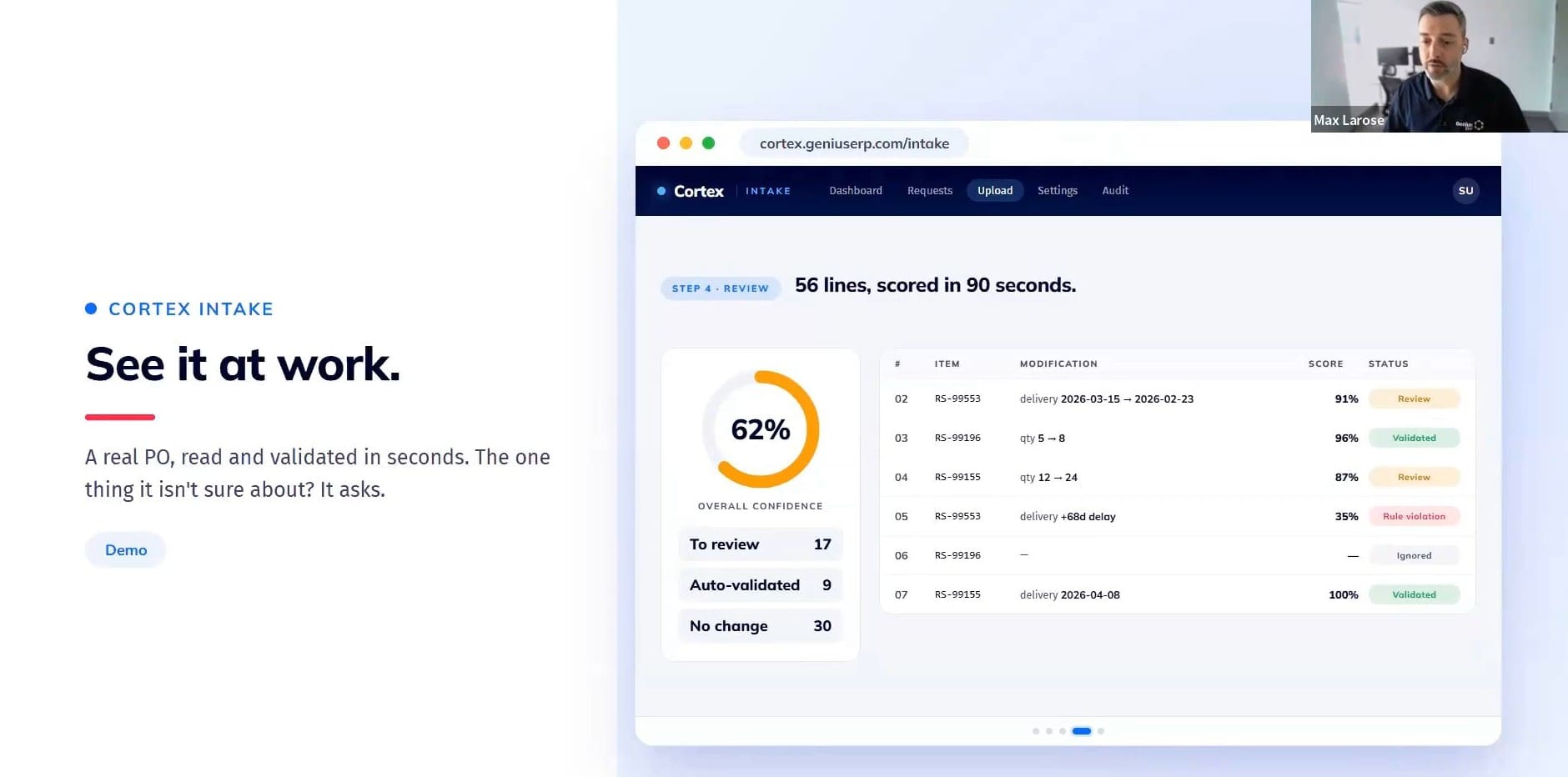
When a customer emails a purchase order, the AI agent automatically retrieves the attachment, identifies the customer and extracts key information such as part numbers, quantities, prices and requested delivery dates. It then checks that information against the ERP system and, provided everything meets the company’s business rules, creates the sales order automatically.
If something falls outside those rules, such as a pricing discrepancy, missing information or an unexpected delivery date, the order is flagged for review before it’s processed.
That’s an important distinction. AI agents aren’t designed to remove people from the process. They’re designed to remove the repetitive manual work while leaving employees responsible for the decisions that require experience, customer knowledge and professional judgement.
Modern AI systems are also becoming far more transparent. Rather than operating as a “black box”, they can explain why a decision was made and provide confidence scores, giving employees a clear understanding of what has been processed automatically and what needs further review.
How AI Agents Are Delivering Results
As with any new technology, the results depend on the process being automated and how it’s implemented. However, early uses of AI-powered order entry are already delivering encouraging results.
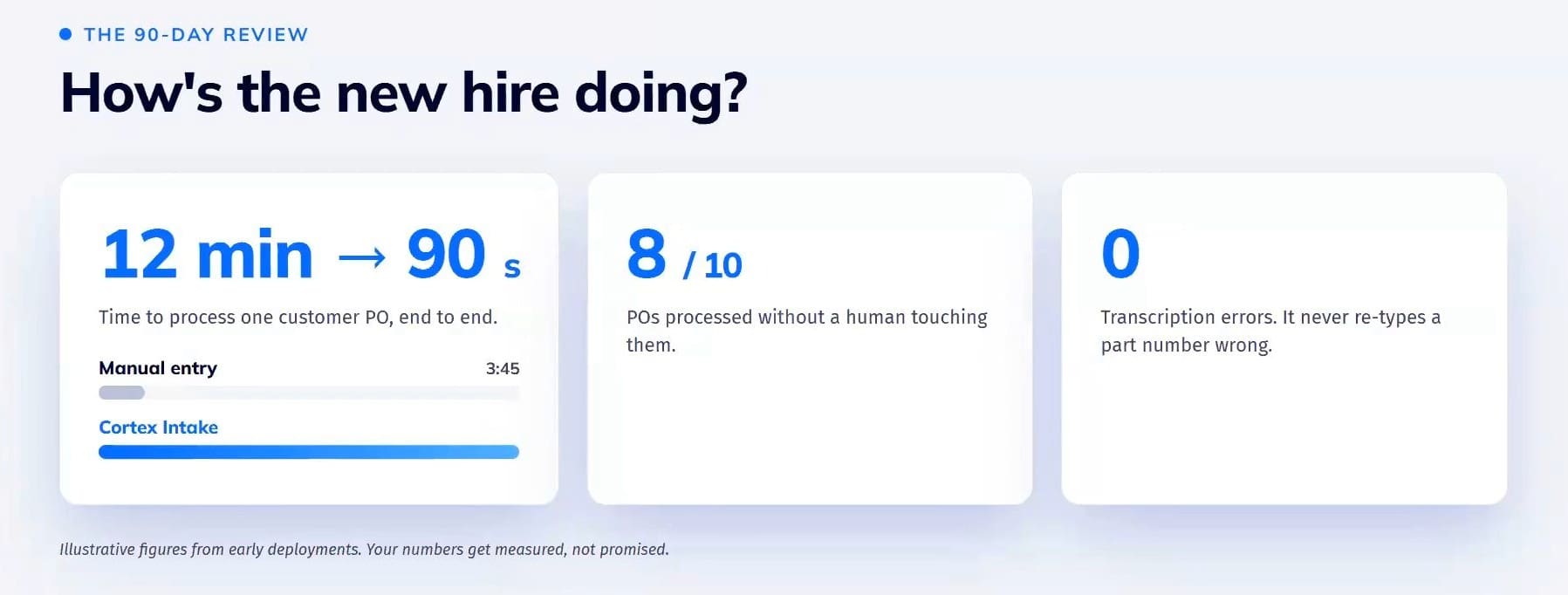
In one manufacturing business, the time needed to process a purchase order was reduced from around 12 minutes to just 90 seconds, with approximately 80% of purchase orders processed without any employee involvement. Because information is transferred directly from the customer’s purchase order into the ERP system, manual data entry errors are also eliminated.
The greatest benefit, however, isn’t simply processing orders more quickly.
Every purchase order handled by an AI agent is one less repetitive administrative task for customer service or sales teams to complete manually. Instead of spending hours entering data into the ERP system, employees can focus on supporting customers, resolving issues and dealing with the exceptions that genuinely require their attention.
Where Else Can AI Agents Make a Difference?
Order entry is just one example of the routine administrative processes that can benefit from AI automation.
Accounts receivable is another area where manufacturers can see positive results. Following up on overdue invoices is essential for maintaining healthy cash flow, but it’s also repetitive work that can easily be delayed when finance teams are focused on other priorities.
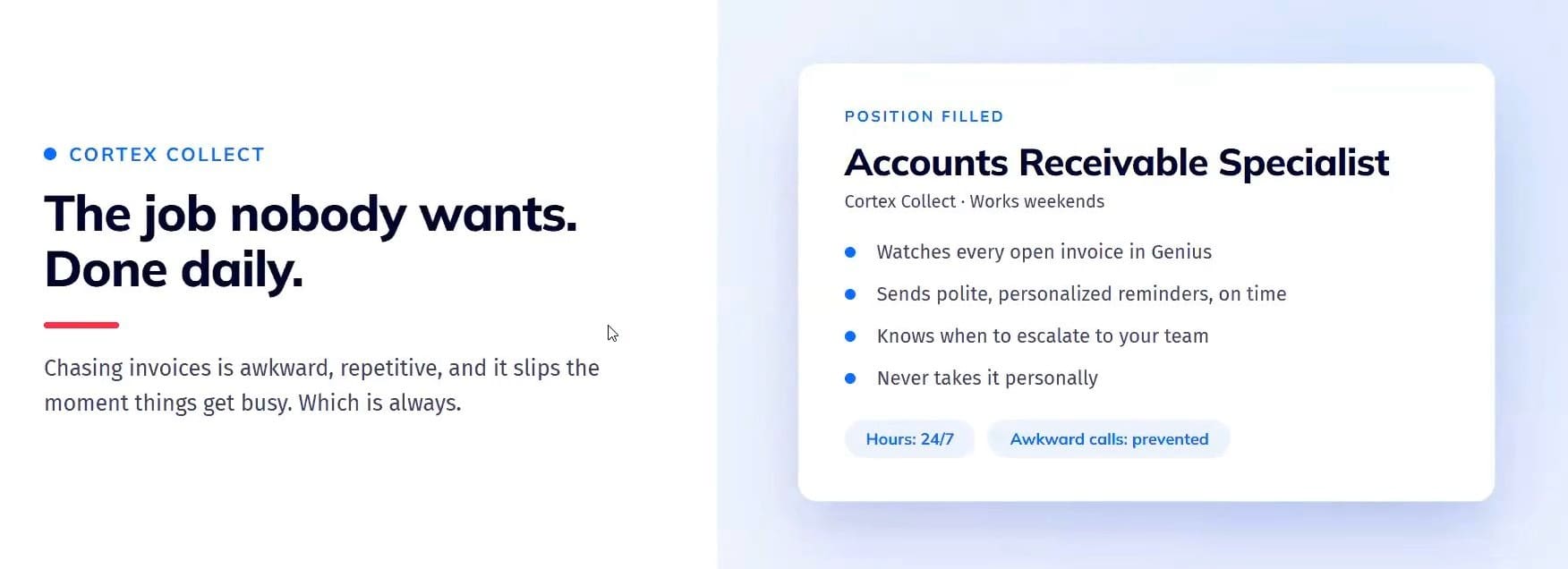
An AI agent can continuously monitor outstanding invoices, prioritise overdue accounts, draft personalised payment reminder emails, track customer responses and prompt employees when further action is needed. If a customer disputes an invoice or requests alternative payment arrangements, the issue can be passed to a member of the team for review.
The AI handles the routine follow-up, while employees focus on the conversations and decisions that require experience and judgement.
Early customer implementations have reported improvements such as lower Days Sales Outstanding (DSO), fewer manual collection activities and several hours of administrative work returned to finance teams each week.
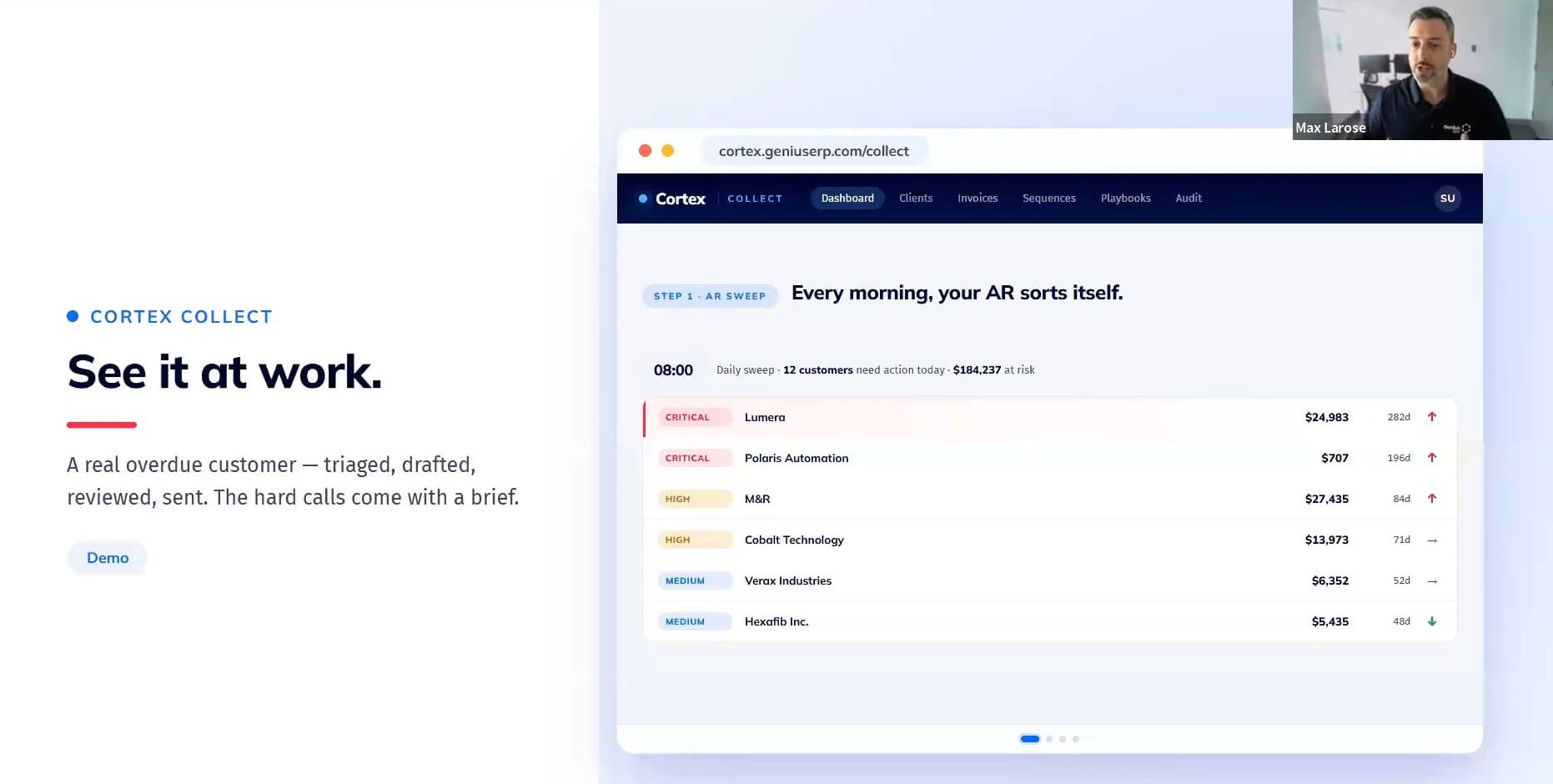
Order entry and accounts receivable are only two examples. Many manufacturing processes that share similar characteristics are well suited to AI automation, including:
- Timecard validation
- Accounts payable invoice matching
- Purchase order follow-up with suppliers
- Turnover documentation packages
- Other repetitive administrative processes based on established business rules
Although the processes themselves are different, the objective is always the same: reduce routine administrative work so employees can spend more time on activities that add value to the business.
Start with One Process
The most effective approach is to begin with a single, clearly defined process rather than trying to automate an entire department. Starting small makes it easier to measure results, refine the process and build confidence before expanding AI into other areas of the business.
The best candidates for AI automation tend to have a few things in common. They’re repetitive, follow established business rules, occur frequently and rely on information that’s already available in digital form.
On the other hand, processes that depend on negotiation, creativity or complex decision-making are generally less suitable. Likewise, tasks performed only occasionally often don’t deliver enough value to justify automation.
By focusing on one well-defined process first, manufacturers can achieve measurable improvements more quickly while gaining practical experience with AI. Once an AI agent has proved successful in one area, it’s much easier to identify other routine processes that could benefit from automation.
Before You Automate a Process, Ask:
- Is the work repetitive?
- Does it follow established business rules?
- Does it happen frequently?
- Is the information already available digitally?
- Can success be measured?
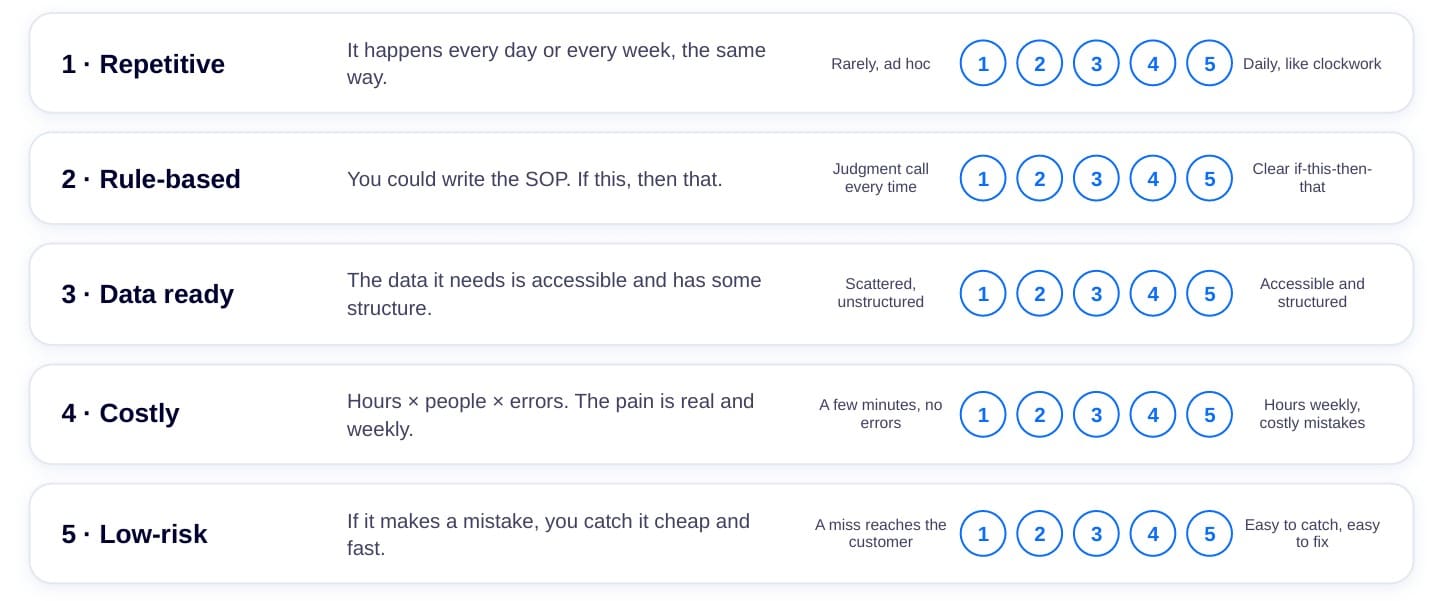

The App Hire Scorecard
A Different Way to Think About Hiring
Manufacturers will always need skilled people. Engineering expertise, customer relationships, production planning and problem-solving all depend on employees with experience, judgement and industry knowledge.
What’s changing is the way businesses think about repetitive administrative work.
Instead of assuming every increase in workload requires another member of staff, manufacturers now have another option to consider. For routine, process-driven tasks, an AI agent may be able to take on much of the day-to-day administration, allowing employees to focus on the work where they can make the greatest impact.
That doesn’t make people any less important. If anything, it makes their skills and expertise even more valuable.
As AI continues to become part of day-to-day manufacturing operations, the question is no longer simply whether to use AI. It’s where it can deliver the greatest value.
For many manufacturers, the best place to start isn’t by trying to automate everything. It’s by identifying one repetitive process where an AI agent can save time, reduce manual work and free employees to focus on higher-value activities. Watch our webinar: What If Your Next Hire Is an Agent to learn more.

"*" indicates required fields
Explore related articles

Article - August 12,2026
Planning an ERP Implementation? Start Here
ERP - Implementation
Discover the key steps to a successful ERP implementation, the mistakes to avoid, and best practices shared by Christian Pouliot, Director of Professional Services at Genius ERP.

Article - August 10,2026
How Manufacturers Can Use Real-Time Business Intelligence
Analytics & Reporting - Custom Manufacturing - ERP
Discover how real-time business intelligence helps manufacturers make faster, smarter decisions using live data and actionable KPIs.
Article - August 06,2026
ERP vs CRM: What’s the Difference for Manufacturers?
ERP
ERP and CRM software are valuable tools that every manufacturer needs. While both will increase the overall profitability of your business, CRM software helps you manage your customers, whereas ERP software helps you streamline all of your business processes.

A manufacturing ERP that works as hard
as you do.
Give us a call to see how we’re different.
Request a demo

